


/03-cosi/_dsc0996_pr.jpg?format=auto&fit=crop&w=345&h=200&auto=format)




Blog
January 13, 2026
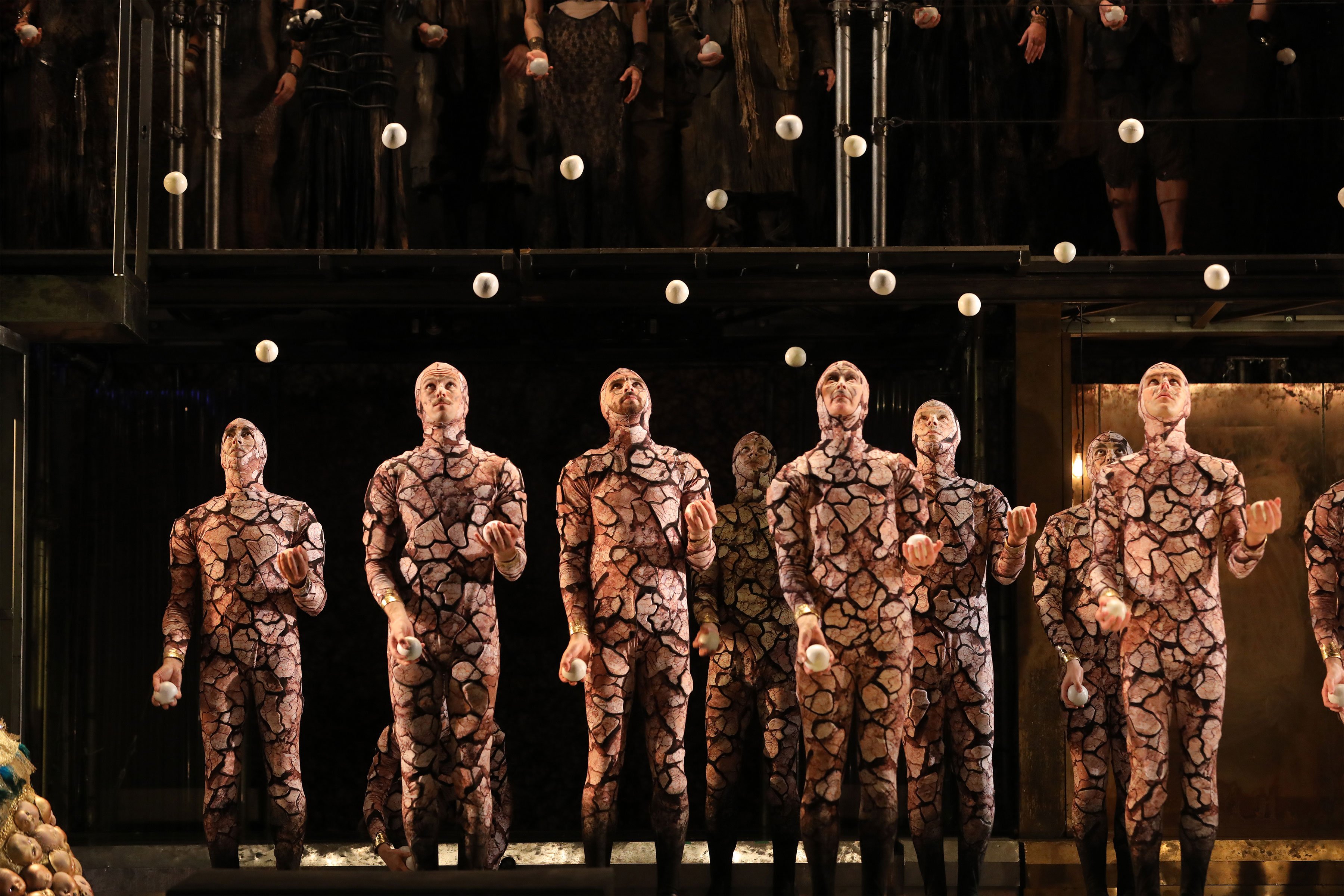
Juggling in "Akhnaten"
 The earliest known record of juggling was created 4,000 years ago, a wall painting (above) in Tomb 15 of Egypt’s Beni Hasan cemetery complex near present-day Minya. The tomb belonged to Baqet III, a provincial governor during the later years of the Eleventh Dynasty of Egypt. It depicts female dancers and acrobats juggling up to three balls; one of them is juggling with her arms crossed. Brooklyn Museum associate curator Dr. Robert Bianchi has suggested that the tomb’s depiction of jugglers may be “an analogy between balls and circular mirrors, as round things were used to represent solar objects, birth and death.” “While there is a symbolic connection to these first known representations of juggling, the juggling featured in this production of Akhnaten has a purposely equivocal role,” says Sean Gandini, choreographer of the juggling ensemble. “In some ways, the objects are alter egos to the characters’ ideas: miniature globular deities, bouncing thoughts, desert sand. On another level, I feel like the juggling has a structural relation-ship to Philip Glass’s score. We have tried to make the patterns relate to the music and create a dialogue with it. We tried to create a series of little ephemeral geometries that hover visually around the music.”