



/03-cosi/_dsc0996_pr.jpg?format=auto&fit=crop&w=345&h=200&auto=format)




Blog
March 19, 2026
From Page to Stage: "Falstaff"
At the end of Shakespeare’s King Henry IV, Part 2, Sir John Falstaff approaches the newly crowned King Henry V, expecting a reward for their former friendship. Instead, the king publicly rejects him. The shock devastates Falstaff so completely that he later dies of a broken heart in King Henry V. Readers of Shakespeare’s histories do not find this rejection surprising. Falstaff never behaves in a manner that would justify royal favor. Yet it's still heartbreaking to see the knight not be given a chance to be taken seriously. Shakespeare may have killed off Falstaff, but he found a new life thanks to opera.
In 1887, Giuseppe Verdi premiered what he believed would be his final opera, an adaptation of Shakespeare’s Otello. At seventy-three, he enjoyed good health but clearly recognized that he had entered the final chapter of his life. He doubted whether he possessed the strength to complete another major work. Still, after nearly five decades devoted to composition, he could not simply walk away. He made one firm decision: he would not promise a new score to any theater if even the slightest chance existed that he might leave it unfinished.
Fortunately for Verdi—and for generations of opera lovers—his Otello librettist, Arrigo Boito, revered him so deeply that he eagerly agreed to begin another collaboration, even without any assurance that they would complete it.
Working quietly and avoiding public attention, Verdi and Boito began planning a new project. Only one other person shared their secret: Verdi’s wife, Giuseppina. Verdi and Boito’s shared love of Shakespeare led them first to consider King Lear or Antony and Cleopatra. Yet another idea lingered in Verdi’s mind.
Throughout his career, fellow composer Gioachino Rossini—an admirer in many respects—insisted that Verdi lacked the gift for comedy. Verdi rejected this claim outright. His youthful comic opera, Un giorno di regno, had indeed failed. Still, he argued that he never returned to the genre simply because no one offered him another opportunity. After the triumph of Otello, he confided to Boito, “After having relentlessly massacred so many heroes and heroines, I have at last earned the right to laugh a little.”
Determined to prove his comic instincts, Verdi first explored Miguel de Cervantes’s Don Quixote, then turned to several Italian comedies. Soon afterward, someone sent him a French libretto based on The Taming of the Shrew. He admired it but concluded that only a composer such as Rossini or Donizetti could truly make it succeed. This realization steered him back toward Shakespearean comedy, and he ultimately settled on The Merry Wives of Windsor.
At least four prominent composers, including Antonio Salieri, tried to adapt the play, yet none left a lasting impression. Otto Nicolai enjoyed some popularity with his 1849 German-language setting, yet audiences outside German-speaking regions largely ignored it. If anyone could create a musical landscape capable of doing justice to Shakespeare’s wit, Verdi seemed the ideal candidate—a devoted student of the Bard who had already triumphed with Macbeth and Otello.
Free from commissions or deadlines, Verdi and Boito could shape what would become Falstaff at their own pace. Still, Verdi never lost sight of the ultimate deadline: his own mortality. The deaths of close friends during the composition process intensified these fears. He voiced his concerns openly to Boito. Fearing he might waste the librettist’s time, he even considered abandoning the work. He feared not only death, but the possibility that his final work might meet the same fate as Shakespeare’s knight—dismissed, misunderstood, and left behind.
Yet composing energized him more than anything else. In the shadow of death, he chose to celebrate life through art. On July 10, 1889, he wrote to Boito, urged him to dismiss earlier doubts, and pressed him to continue. Boito responded with delight.
Nearly three years later, in September 1892, the collaborators completed Falstaff. Verdi promptly presented the score to Milan’s Teatro alla Scala, Italy’s most prestigious opera house, which scheduled the premiere for the 1892–93 season. News of the new work spread quickly and transformed opening night into one of the most coveted cultural events in the city. Buyers paid up to thirty times the usual ticket price. The premiere electrified the audience. Performers repeated several musical numbers, and applause reportedly continued for nearly an hour. For one glittering evening, it seemed impossible that Verdi’s Falstaff could ever suffer the fate of Shakespeare’s.
Instead of building the opera around conventional showpiece arias, Verdi created an almost continuous musical conversation. Voices overlap, ensembles flash by in seconds, and the orchestra comments with extraordinary precision and humor. The result was an opera unlike any other at the time. Musicians came to regard Falstaff as Verdi’s most technically accomplished score—a work in which decades of theatrical experience distill into music of remarkable clarity, speed, and invention.

But the general audience’s response proved more complex at first.
Like Shakespeare’s knight turned away by his king, Verdi’s Falstaff now faced rejection from the very audiences he hoped to delight. The new style and sudden turn toward comedy unsettled his fans. One critic protested, “Is this our Verdi? Where are the broad melodies… the usual ensembles… the finales?” Frequent revisions only deepened the confusion. Verdi altered the score so often that his publisher struggled to keep pace, and opera houses hesitated over which version to perform. During his lifetime, Verdi watched the work gradually slip from the repertoire and feared audiences might forget it entirely. Yet what unsettled early listeners would later become the opera’s greatest strength. Rather than offering easily detachable melodies, Verdi shaped a score that rewards attentive listening, revealing layers of contrapuntal detail and rhythmic humor.
Over time, listeners began to recognize that Verdi had not merely written a comedy, but had redefined what Italian opera could be—compressing a lifetime of theatrical knowledge into a score of dazzling intelligence and vitality. Legendary composers such as Igor Stravinsky and Richard Strauss hailed the opera as being ahead of its time. Modern conductors have continued to show their admiration for Verdi’s final masterpiece. Arturo Toscanini performed the opera throughout his career, helping to secure its place in the repertoire during his tenures as music director at La Scala and the Metropolitan Opera. Leonard Bernstein carried on Toscanini’s legacy by championing the opera’s brilliance, and our own music director, James Conlon, has hailed it as “one of the most life-affirming works.” Haunted by thoughts of death throughout its creation, Giuseppe Verdi chose laughter as his final artistic statement. Falstaff may attract jokes, yet through him we discover an essential truth about life itself. He expresses it best in his closing line: “Everything in the world is a jest… but he laughs best who laughs the final laugh.”
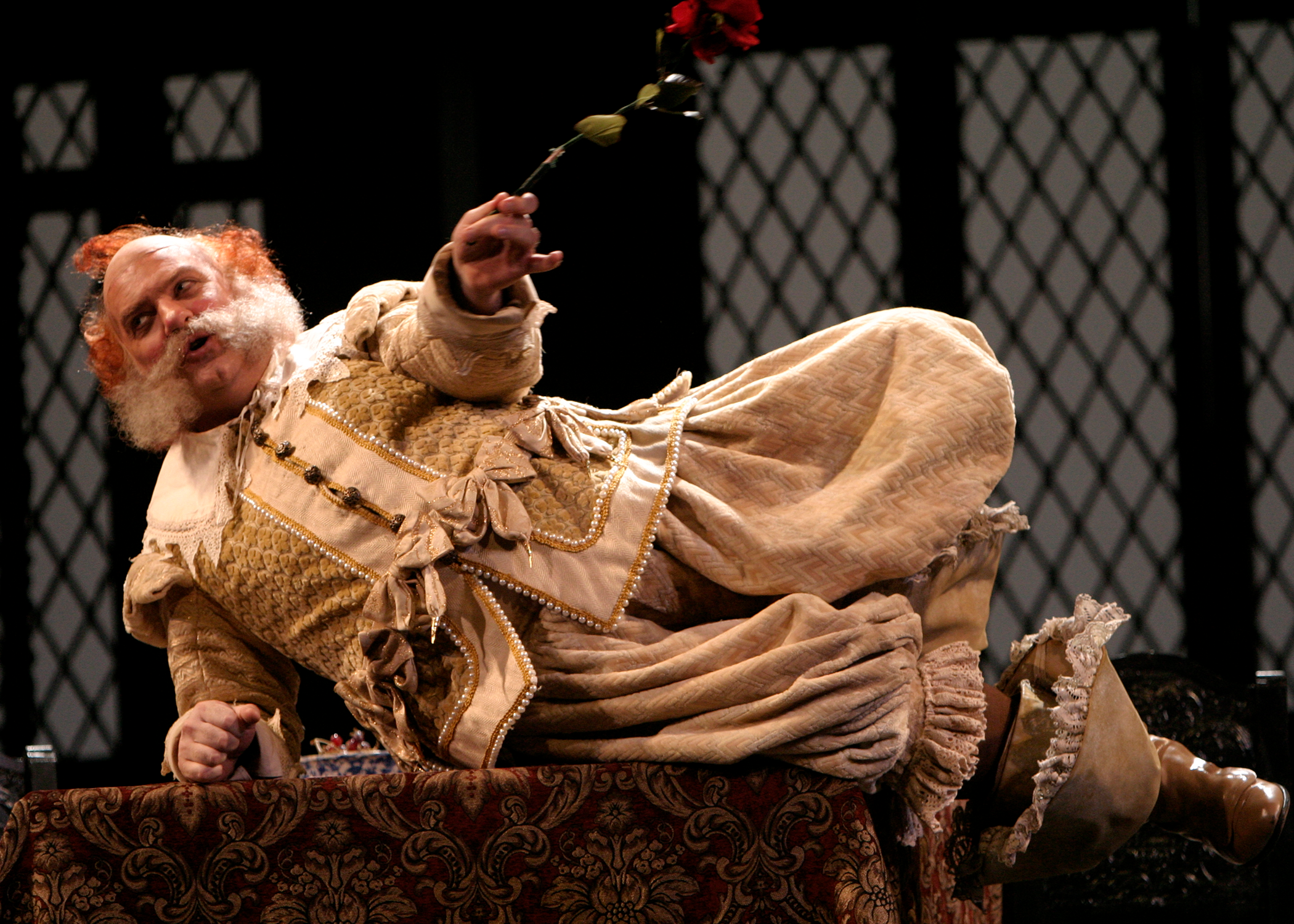
Get tickets to see Verdi’s comic masterpiece Falstaff, starring Craig Colclough in the title role, by clicking here.