



/03-cosi/_dsc0996_pr.jpg?format=auto&fit=crop&w=345&h=200&auto=format)




Blog
March 19, 2026
Verdi's Last Laugh: A Listener's Guide to "Falstaff"
Verdi completely reinvented operatic comedy with Falstaff, his final masterpiece. In all of opera, it would be hard to find a more successful fusion of verbal text and musical score. Here are some moments to listen for.
Dispensing with a traditional overture or prelude, the opera plunges straight into the action with a burst of energetic music. In the raucous comedy to come, the music rarely slows down to pause for traditional arias. The first of Falstaff’s great monologues, the aria “L’onore! Ladri!” (“Honor! Thieves!”), occurs in the opening tavern scene. This musical adaptation of Sir John’s famous speech on honor, taken from Henry IV Part One, shows how Verdi reinforces dramatic ideas through orchestration. Scrutinizing the merits of honor, Falstaff poses a series of rhetorical questions, beginning with “Can honor fill your belly?” (“Puo l’onore riempirvi la pancia?”). With these unaccompanied words, he introduces a melodic phrase that returns, played expansively by the strings, when he decides he wants nothing to do with honor. This majestic orchestral surge celebrates the triumph of Falstaff’s logic. At the end of the scene, the theme reappears at top speed by the trumpet and high woodwinds, with the strings bustling vigorously below, as Falstaff throws his companions out.
In the next scene, the four women compare Falstaff’s love letters, reveling in his over-the-top verbiage. This moment reaches its peak with Alice’s solo reading of the line “Ma il viso tuo su me risplenderà come una sorella sull'immensità” (Your face will shine upon me like a star in the vast firmament). Her grandly arching vocal line is a lighthearted counterpart to the intensely emotional melodies bestowed on many of Verdi’s earlier heroines.
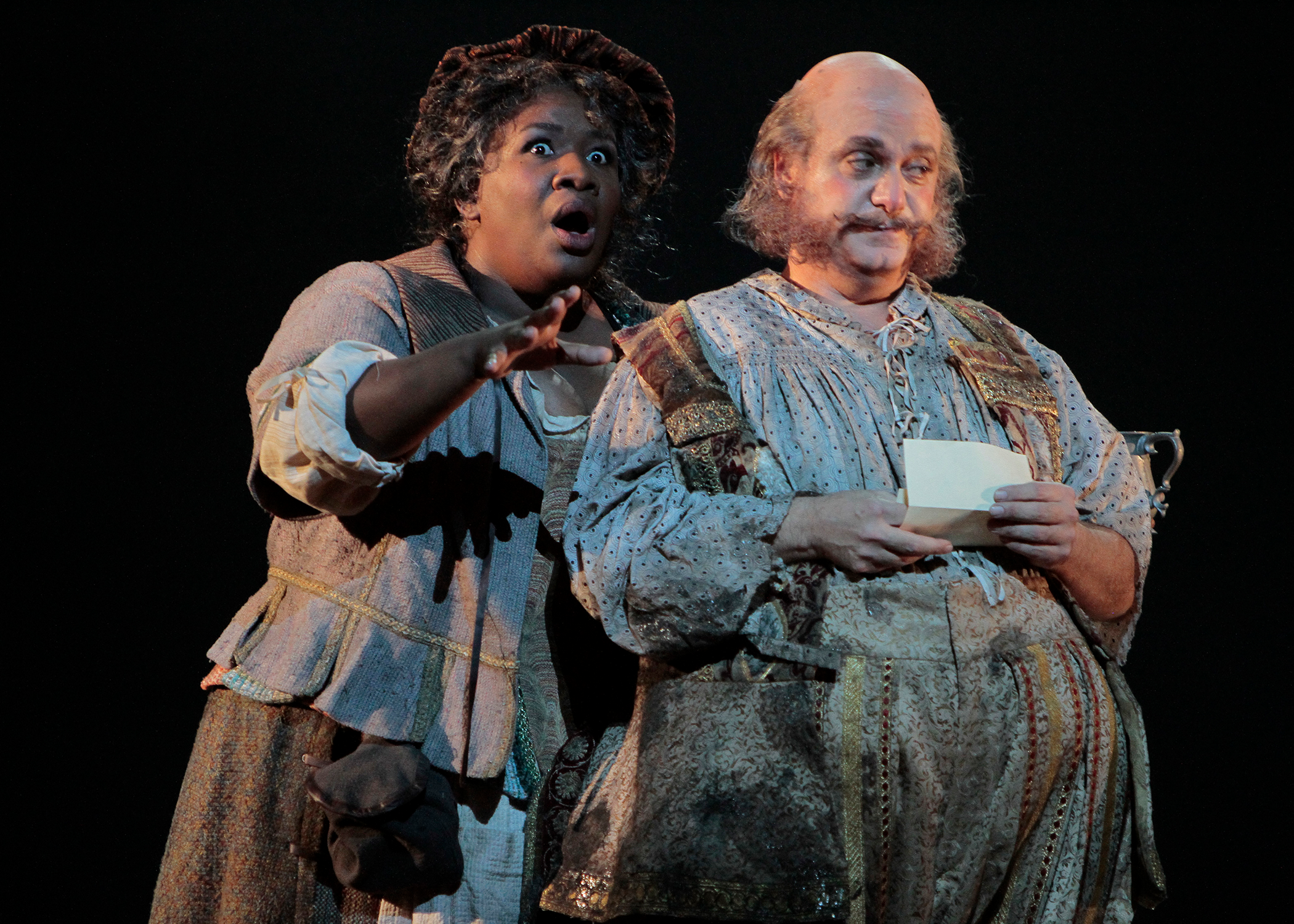
Another vocal highlight later in this scene is a virtuosic ensemble for nine voices, sung at a breathless tempo in three distinct layers: Ford, Dr. Caius, Bardolph and Pistol savor Falstaff’s anticipated comeuppance; the four women continue plotting; and Fenton soars romantically above them all, lost in thoughts of Nannetta.
Amid this comic chaos, Verdi briefly turns to genuine psychological drama in Ford’s Act Two aria, “È sogno? o realtà?” (“Is this a dream or reality?”). Dark, stormy orchestration and sharply etched vocal lines convey his jealousy and inner torment, offering a striking contrast to Falstaff’s buoyant scheming. Even in a comedy, Verdi demonstrates his mastery of dramatic intensity, showing that laughter and emotional depth can coexist seamlessly.
Near the end of Act Two, as the men search for Falstaff in Ford's house, a brief lull interrupts the commotion—the sound of a kiss is clearly heard behind the screen. Ford naturally concludes that his wife and Falstaff are hiding there. Here, Verdi indulges in a time-honored operatic tradition: the concerted ensemble in which characters announce their intention to do something rash (in this case, kick down the screen and kill Falstaff), stretching the tension deliciously as they sing about the deed rather than immediately carrying it out. Verdi creates perhaps the most brilliant and complex example of the form—while gently sending it up.
Act Three opens with a humiliated Falstaff sipping hot mulled wine. Through virtuoso orchestration, Verdi depicts its restorative effect with a trill that begins in the flutes and spreads gradually through the orchestra until every section vibrates together in a fortissimo shimmer: Falstaff feels better!
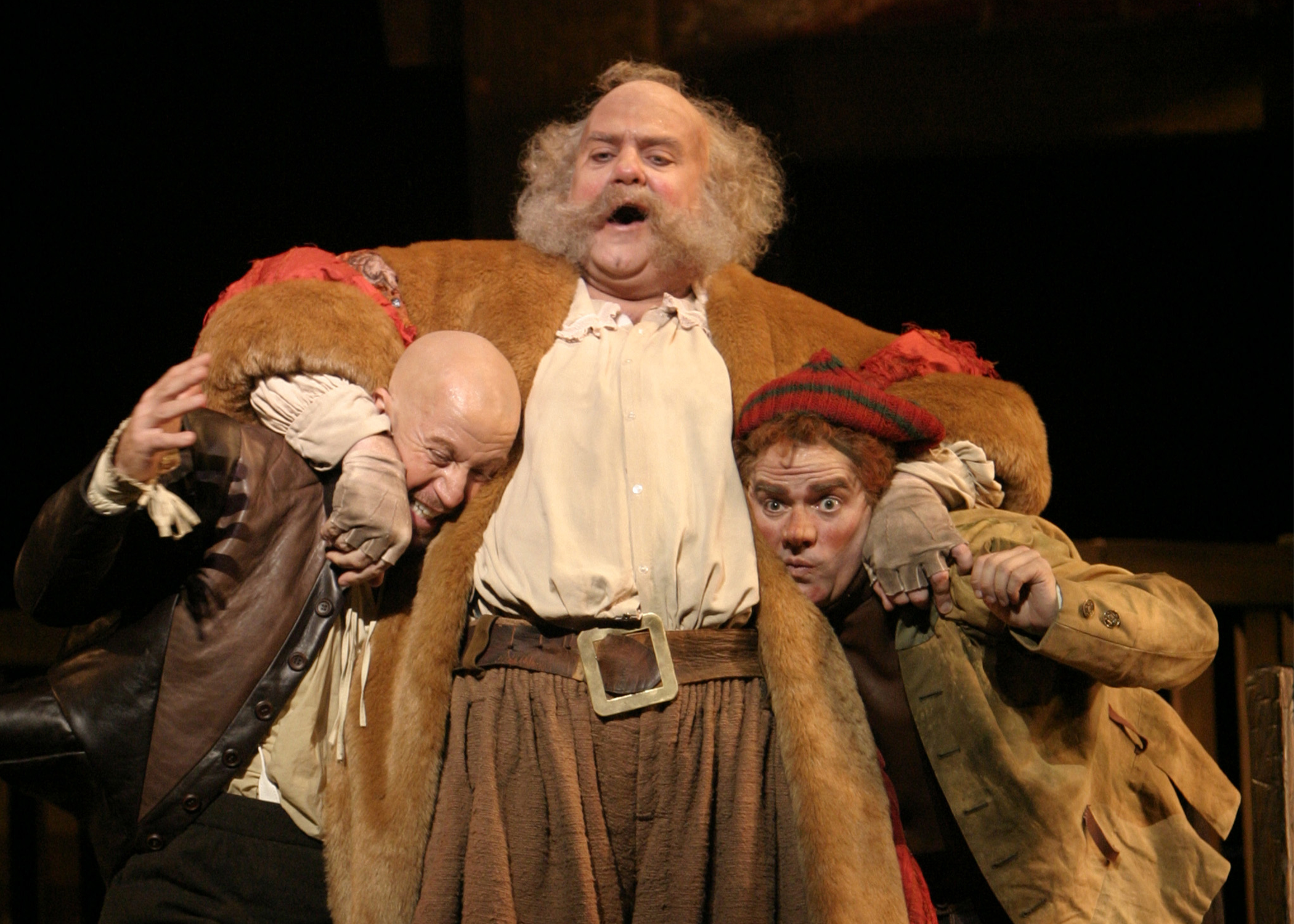
The final scene begins with a rare moment of calm before the inevitable hilarity erupts. Fenton stands alone in the moonlight, dreaming of his beloved. Near the end of his rapturous aria, his voice is joined by Nannetta’s, their unison melody soaring —until Alice abruptly cuts them off mid-high note as she hands Fenton his disguise. There’s no time for romance until both Falstaff and Ford have learned their lessons. Nannetta’s own shining moment soon follows, in her appearance as the Fairy Queen. The last soprano aria Verdi ever wrote, it is notable for its ethereal delicacy, the vocal line floating above a luminous orchestration.
The opera ends with one of Verdi’s most dazzling creations, a finale in the form of a fugue, a genre more often associated with sacred music. The fugue races along in exuberant, tightly woven polyphony—demanding equal virtuosity from soloists, chorus, orchestra and conductor—as Falstaff reminds us that “Tutto nel mondo è burla” (“All the world is a jest”). It is an exhilarating conclusion, and we can sense Verdi’s sheer delight in proving beyond all doubt that he had become a triumphant master of operatic comedy.
Get tickets to see Verdi’s comic masterpiece Falstaff, starring Craig Colclough in the title role, by clicking here.