




/03-cosi/_dsc0996_pr.jpg?format=auto&fit=crop&w=345&h=200&auto=format)






Blog
January 8, 2026
Who's Who in "Akhnaten"?
Ancient Egypt is about to come back to life on our stage. The real lives and stories of the Pharaoh Akhenaten, his queen Nefertiti and their family are a fascinating part of history. In anticipation for Akhnaten, we put together a guide that breaks down the characters, both in terms of their importance to the opera's plot as well as their real life significance. With beautiful costume sketches accompanying each character, this is a feast for the mind and for the eye |
Akhnaten
In the opera: Amenhotep IV becomes pharaoh and creates the first monotheistic religion. He adopts the name Akhnaten to reflect his devotion to the sun god Aten and builds a new capital city, Akhetaten. He is killed by a mob devoted to one of the old gods, Amon.
In history: Akhnaten may have created the cult of Aten to diminish the power of the priests of Amon, a major deity. During his chaotic 17-year reign, the empire disintegrated as he shut himself up in Akhetaten. The circumstances of his death are unknown.
.png)
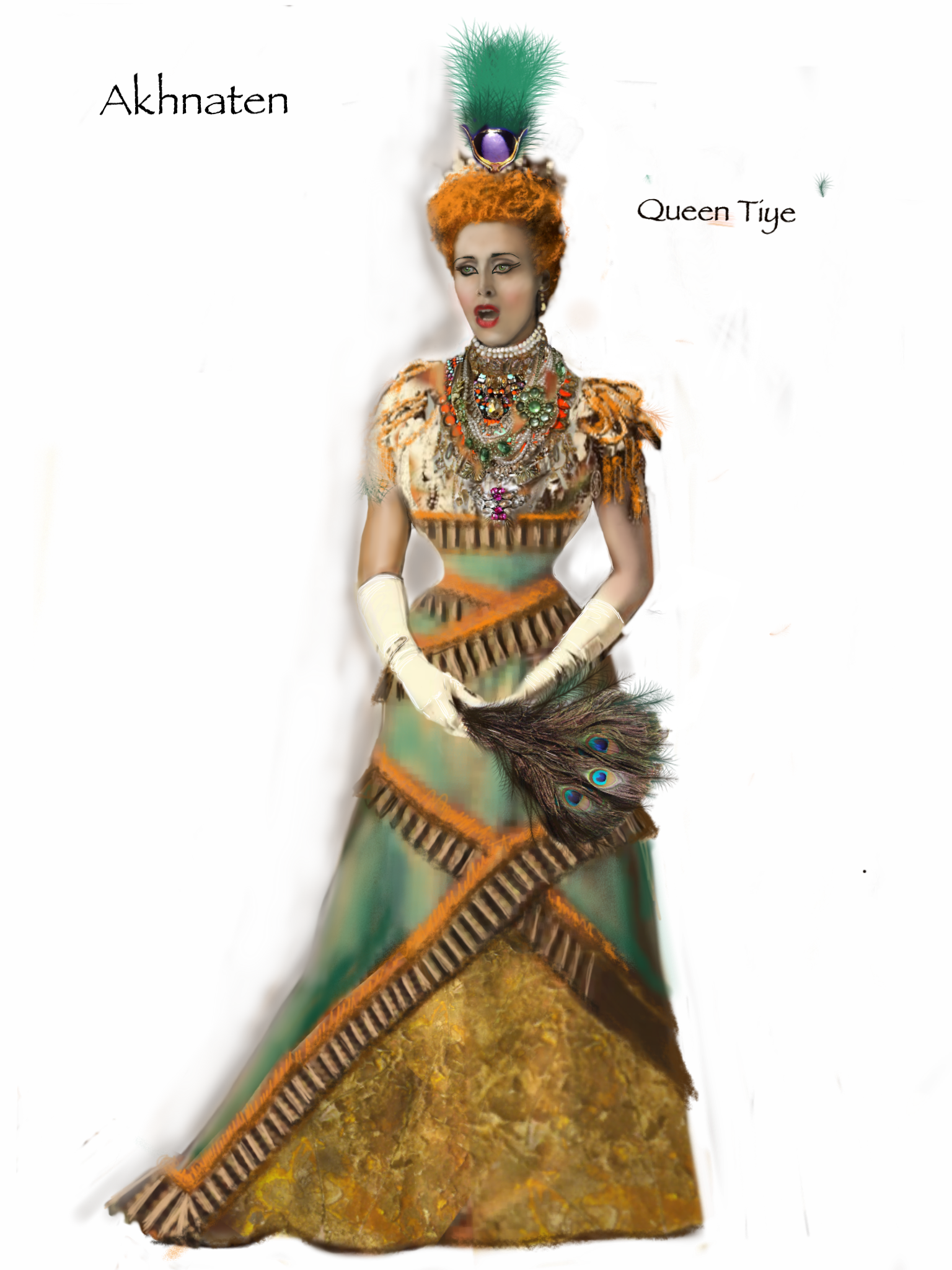
Queen Tye
In the opera: Widow of Amenhotep III, she witnesses the rise and fall of her son Akhnaten.
In history: She was a powerful advisor to both her husband and son, counseling them in military and political matters, and taking an active role in foreign relations. She probably died in the 12th year of Akhnaten’s reign, shortly before his empire began to unravel.
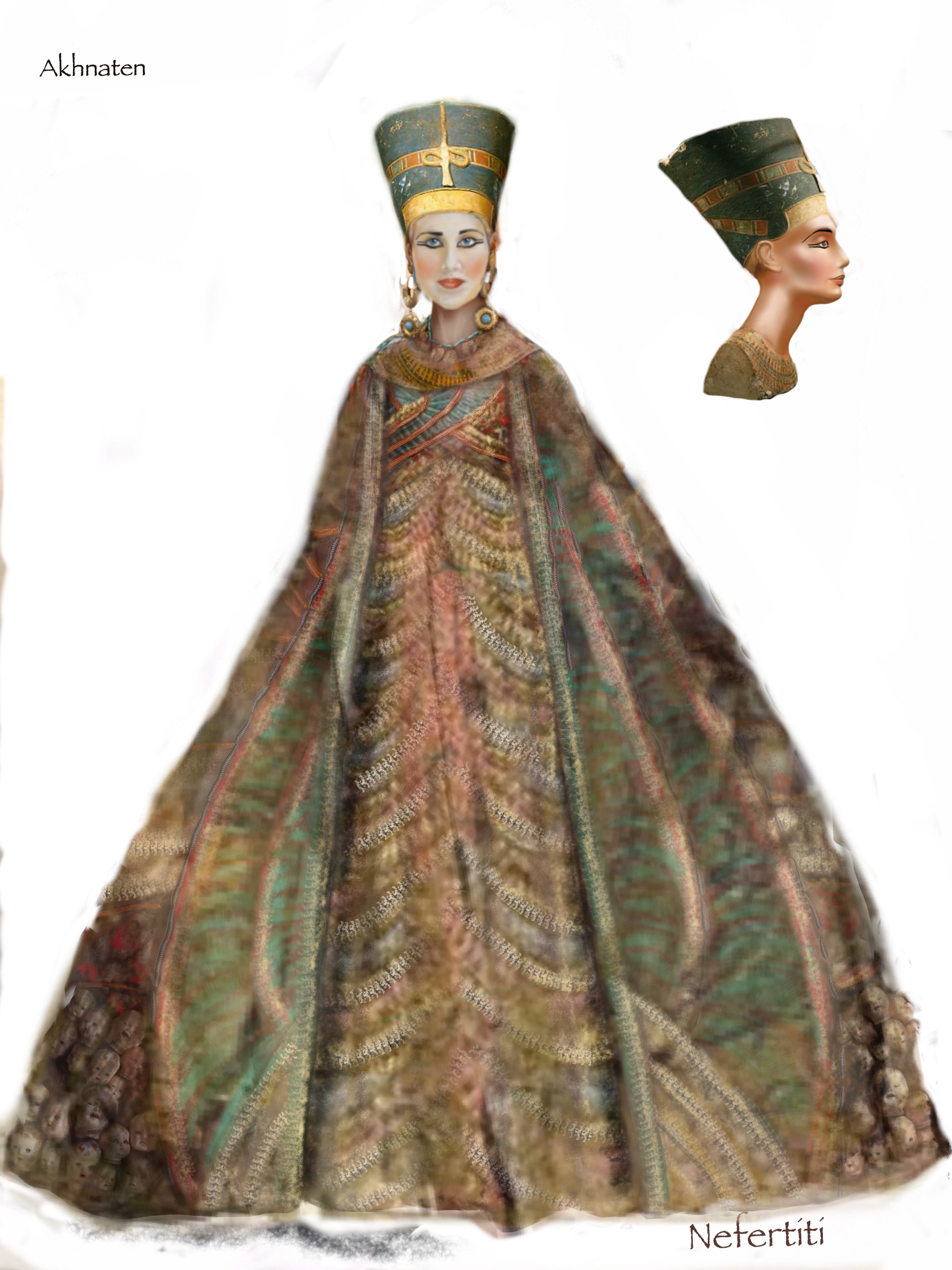
Nefertiti
In the opera: She is the beloved wife of Akhnaten, bearing him six daughters.
In history: Depicted in many portraits with the accoutrements of a ruler, Nefertiti seems to have shared power with her husband. Some speculate that she briefly succeeded her husband as pharaoh.
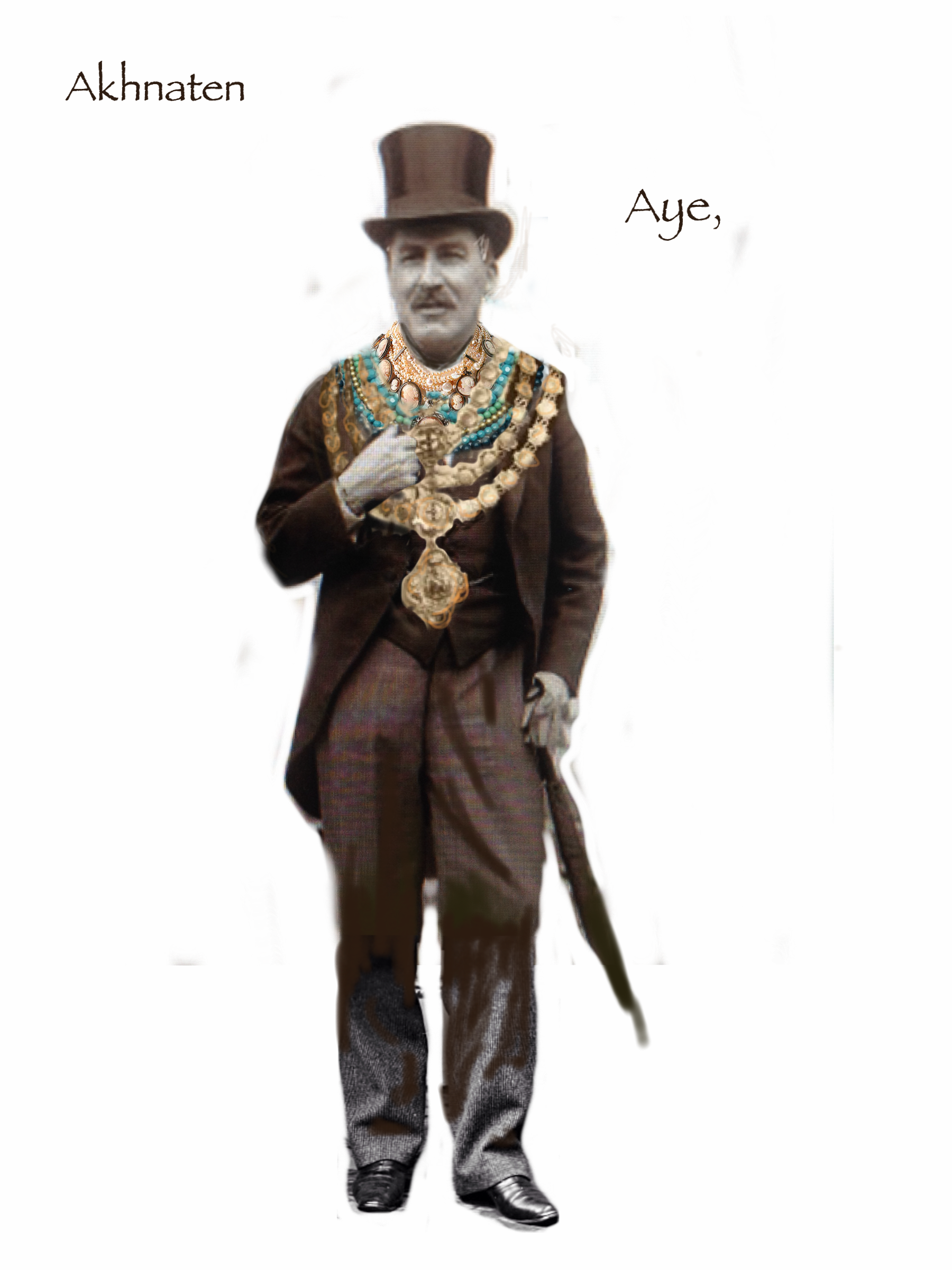
Aye
In the opera: Nefertiti’s father is an advisor to Akhnaten, but turns against him.
In history: Believed to have been Queen Tye’s brother, he may also have been Nefertiti’s father. When the boy Tutankhamun became pharaoh, Aye ran the country as the power behind the throne. He succeeded Tutankhamun, reigning for four years.
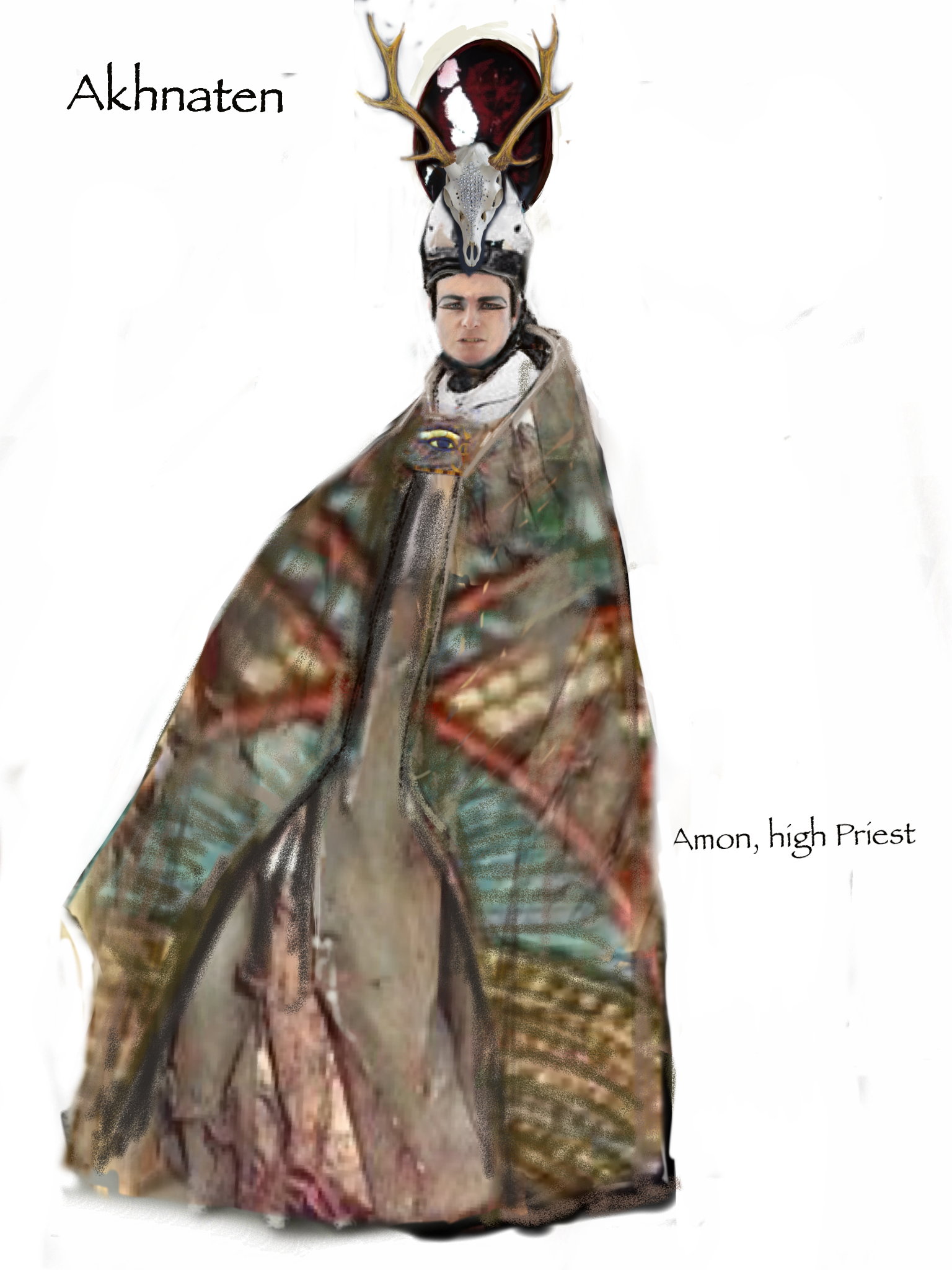
High Priest of Amon
In the opera: After Akhnaten creates a new religion dedicated to Aten, the High Priest unites with Aye and Horemhab to overthrow the pharaoh and destroy his capital city Akhetaten.
In history: In polytheistic ancient Egypt, the cult of Amon—a supreme creator-god associated with the city of Thebes—was very popular. His priests held great wealth and power. At the time Akhnaten became pharaoh, their influence rivaled that of the royal house.
Horenhab
In the opera: He is a general under Akhnaten, but turns against him.
In history: Commander of the army under Akhnaten and Tutankhamun, he was the designated successor to the heirless Tutankhamun. At the time of Tutankhamun’s death, however, Horemhab seems to have been involved in a battle in what is now western Syria, and Aye became pharaoh instead. Horemhab seized power after Aye’s death. Under him, the worship of Amon was fully restored and the nation was stabilized.

Tutankhamun
In the opera: A non-singing role, young Tutankhamun succeeds his father Akhenaten as pharaoh.
In history: He was born Tutankhamen [“living image of Aten”]. His mother was probably one of his father’s sisters. Two other pharaohs had short-lived reigns before he became pharaoh at the age of nine; little is known of them. A puppet of his adult advisors, he revoked his father’s reforms and changed his name to Tutankhamun. He died heirless at 19, largely forgotten until the 1922 discovery of his spectacular tomb.

Amenhotep III / The Scribe
In the opera: The pharoah's funeral ceremonies open the opera, but Akhnaten's father remains a strong presence, narrating the events unfolding onstage in spoken English. Transformed into a 20th-century lecturer at the end of the opera, he reflects on what remains of Akhnaten’s legacy.
In history: The father of Akhenaten, the pharaoh was a powerful, visionary ruler of Egypt’s golden age, presiding over an era of immense wealth, artistic flourishing, and international diplomacy. Revered in his lifetime and deified after death, he left a legacy that shaped royal ideology and monumental building for generations.


Get tickets to Akhnaten by clicking here.