



/03-cosi/_dsc0996_pr.jpg?format=auto&fit=crop&w=345&h=200&auto=format)




Blog
March 25, 2026
Shawna Lucey on "Falstaff"
A Note from the Director
We have been telling this story wrong for centuries.
Sir John Falstaff, that magnificent, rotund monument to self-delusion, arrives in Windsor convinced that the world exists to indulge him. He is charming. He is funny. He is, without question, the opera’s most colorful figure. And he must yield center stage because Falstaff belongs to Alice Ford and Meg Page. It always has.
Shakespeare wrote The Merry Wives of Windsor—the play on which Verdi’s opera is built—at a precise and charged moment in English history: the 1590s, when Queen Elizabeth I had ruled for four decades and her subjects were still reckoning, uneasily, with what female authority meant. The question of whether women could govern at home, at court, over a nation was not academic. It was alive, contested, and urgent. Shakespeare understood this. Into that climate, he placed two ordinary housewives and gave them complete dominion over everyone around them.
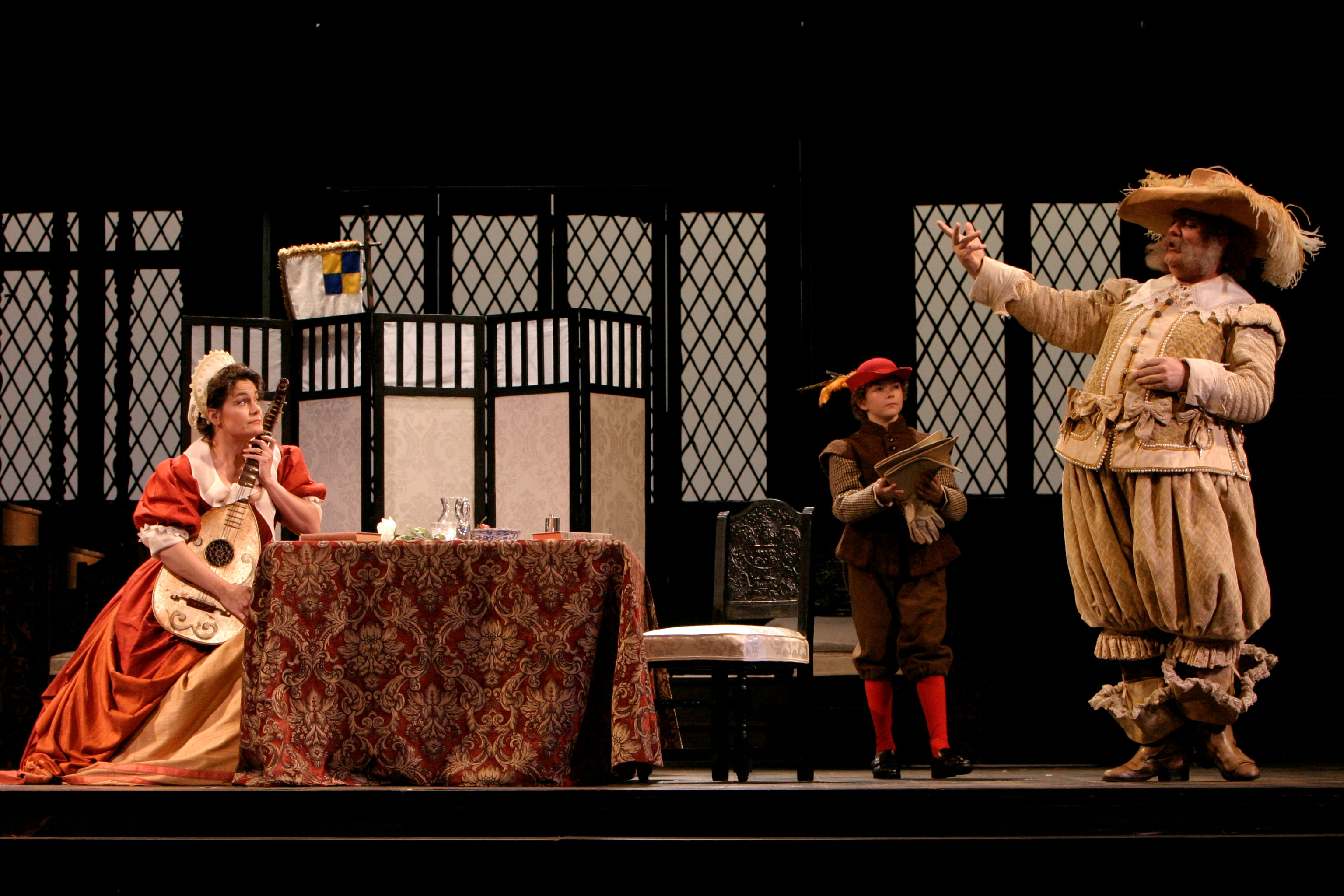
Alice and Meg don’t merely outwit Falstaff. They design his humiliation with the precision of military strategists. They deploy the tools of their domestic world—the laundry basket, the household linens, the rituals of the hearth—as instruments of justice. Their “Feminine Jurisdiction,” as the scholar Natasha Korda has called it, is not a small or private thing. It is sovereign.
And Shakespeare makes the political stakes explicit. The final scene, with its Fairy Queen masque, draws a direct line between the wives’ governance of their households and Elizabeth’s governance of her kingdom. The message is unmistakable: a woman who can manage a home with intelligence, strategy, and moral clarity can manage a country. Domestic leadership and political leadership are not separate categories. They are the same capacity, expressed at different scales.
Verdi, working at the end of his own extraordinary life, understood what he had in this material. His Alice is not a victim to be rescued. She is the architect of every scene she inhabits. The fugue that closes the opera, “Tutto nel mondo è burla” (“All the world’s a jest”) may bear Falstaff’s name, but it is Alice’s laughter we carry out into the night. And yet, what makes Falstaff one of the greatest characters in all of literature is this: even after his comeuppance, even stripped of his pretensions and his dignity, he remains not only mirthful but celebrates his power to inspire mirth in others. That is no small gift. May we all find such merriment in ourselves, in each other, and most of all, at the opera.
Click here to get tickets to Falstaff.