



/03-cosi/_dsc0996_pr.jpg?format=auto&fit=crop&w=345&h=200&auto=format)




Blog
March 25, 2026
A Cosmic Scherzo
Tutto nel mondo e burla, L'uom è nato burlone...
Tutti gabbati! Irride l'un l'altro ogni mortal.
Ma ride ben chi ride la risata final.
Everything in the world is a joke. Human beings are born jesters.
All are mocked. They ridicule each other.
But they who laugh last, laugh best.
By James Conlon
Giuseppe Verdi’s Falstaff and Wolfgang Amadeus Mozart’s The Magic Flute, two great final operas from their respective and much beloved composers, will be the last productions I will conduct as Music Director of LA Opera. I very much wished to mark this moment.
Verdi’s lifelong love for the works of William Shakespeare produced Macbeth (1847/1865), Otello (1887) and Falstaff (1893). He attempted, but never succeeded, to write a King Lear. These three works have been with me since my earliest musical memories in the 1960s. I had seen two of them by the age of 14. Less than a decade later, in 1972, I conducted Falstaff, my first professional engagement. A year later, Macbeth, and by 1976, Otello. By the end of this series of performances, I will have conducted these three works, almost in exact equal measure, 191 times.
Very early on, I became familiar with an essential literary voice when it came to both Shakespeare and Verdi. Through two essays, “The Prince’s Dog” and “The Joker in the Pack,” W.H. Auden opened a new vast horizon to me. The former, using Falstaff, and the latter Iago, were starting points for a profound study not just of their authors, but for the universal implications of both characters, their worlds, and ours.
Sir Bernard Miles, the great British actor, remarked “we are all of us Iagos, all Falstaffs.” Coincidentally, the same baritone, Victor Maurel, created them both in Verdi’s premieres.
There is a story, possibly apocryphal, that Auden taught a class at the New School on Shakespeare’s The Merry Wives of Windsor in the 1940s. He opined that it was a boring and uninteresting play, and that its greatest significance was that it provided the world with a story that one day, centuries later, would inspire one of the great works of western civilization: Falstaff, the opera. It was written by the then 80-year-old Verdi, in an historic collaboration with the librettist Arrigo Boito. Instead of proceeding with a reading and lecture on Shakespeare’s original, Auden played a recording of the entire opera for the class instead (presumably on 78RPMs).
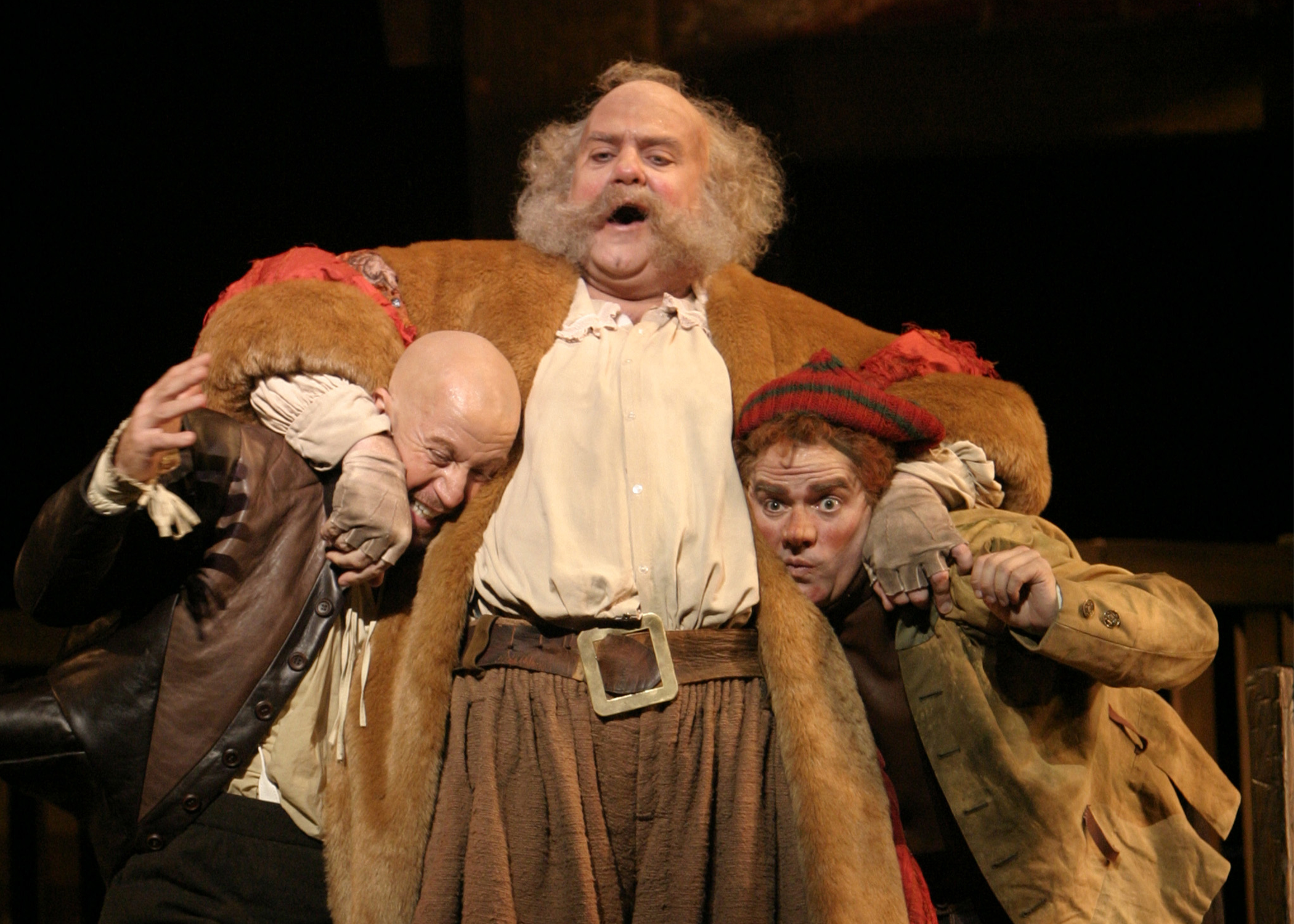
Together with Otello, Falstaff represents the zenith of Italian opera. It is a highly innovative culminating achievement of more than a half-century’s artistic output. It is Verdi’s final opera, a musical longevity virtually unmatched in the history of classical music. In those years, Verdi gradually transformed the meaning of Italian opera. He inherited a strong, 200-year-old tradition with his direct predecessor, Gioachino Rossini, at its head. While always respecting and integrating that tradition, he gradually reformed it. He worked towards a continuous flow of music that involved, basing everything on the dramatic situation. He gradually downgraded the predominance of arias, cabalettas, set numbers, vocal display and high notes. Falstaff and Otello perplexed some traditional opera lovers. But they have also won over many who had no particular sympathy for Italian opera, including countless devotees of so-called “absolute music,” affording them some access to the Italian opera, and in some cases, begrudging admiration.
Many musicians and musicologists who are restrained—if not downright dismissive of Italian opera, cite Otello and Falstaff, alongside the three Mozart/Da Ponte operas and Wozzeck, Pelléas et Mélisande, Tristan und Isolde, Boris Godunov and Parsifal, as absolute musical masterpieces. Falstaff completes the cycle, begun in Florence with Claudio Monteverdi, of lyrical works blending text, voice and orchestra, dramatic narrative and reflective prose and poetry, libretto and music. Whether or not in tandem with, or under the influence of German music (Wagner and Beethoven in particular), the polyphonic intricacy and glorification of the orchestral texture of Falstaff, a logical conclusion of Verdi’s own development, had no precedent or equivalent in the Italian tradition. In the opinion of many, Falstaff’s musical and comedic perfection has never been matched subsequently.
Verdi’s 80 years afforded him the privilege of writing for his own pleasure without taking theaters, impresarios and singers into consideration. With detachment, he created a multi-layered work to suit his fancy. First and foremost, with librettist Arrigo Boito’s brilliant collaboration, they transformed a Shakespearean character drawn from both The Merry Wives of Windsor and the two parts of Henry IV into a successful comedy, an accomplishment that had eluded Verdi since his 1840, which saw his only (unsuccessful) attempt to write one, Un Giorno di Regno (A One-Day Reign). For 53 years, that failure was a thorn in his side. It is a stunning accomplishment for a man of 80 to have written anything, let alone a comedy, his last of 26 operas after a life creative in melodrama and tragedy. And then to have bequeathed the world a perfect (I use the word advisedly) opera. The level of inspiration, the wealth of melodic and harmonic invention, which proceeds with the plot at lightning speed, lacks nothing and includes nothing superfluous.
It is a work of paradoxes, ironies, and contradictions. A raucous comedy with profound undertones, it reflects both the philosophical wisdom and resignation of old age. And yet it is infused with astonishing youthful vigor. It demonstrates a total mastery of marrying text and music. Dramatic wit, melodic and contrapuntal invention (the final fugue a culminating accomplishment) cohabit a musical text replete with self-deprecating humor and irony. The use of musical gestures drawn from the long shadow of his past triumphs, at times suggests ironic devaluation of the musical and theatrical language that he had built over his lifetime.

And yet it is equally the logical conclusion of the development of the musical language of the entire corpus of his works. From Nabucco on, one sees a progressive and inevitable metamorphosis from the strict bel canto traditional forms to so called “through-composed music,” from set numbers to seamless dramatic constructions. Step by step, Verdi developed the orchestra from its previous subsidiary role to that of equal partner and in the end to that of the center spoke of the wheel. One sees the same wealth of deep humanity that informs all of Verdi’s works, now with a maturity and depth unimaginable at the beginning of his compositional career.
No other operatic work employs numerous subtle self-citations (Verdi lovers will recognize many of them) that fill the work with ironic and self-satirizing humor. With a distanced eye and ear, he winks at the entire melodramatic tradition to which he had devoted his life. It is a perfect combination of the skepticism (even cynicism) of an octogenarian genius and an extraordinary life-affirming joie de vivre.
His three Shakespearean operas, paradoxically, are a two-edged sword. They have encountered resistance, devaluation as well as special reverberance in the Anglo-Saxon world. In the 19th century, these works were constantly compared to their literary originals, disappointing some while convincing others. The majority view emerged that, in writing Macbeth, Verdi had made a giant leap in both his and contemporary opera’s development but fell short of Shakespeare’s masterpiece. To my mind, this observation misses the point in many ways. It should be noted that neither Verdi, nor anybody else in Italy at the time, either read or saw Shakespeare in the original language. Verdi wrote his first version of the opera in 1847, before the first theatrical performance of the original play (of course, in translation) had ever been seen in Italy!
Auden writes “if Verdi’s Macbetto fails to come off, the main reason is that the proper world for Macbeth is poetry, not song. He won’t go into notes.”
Not so for Otello. Verdi and Boito, equaling Shakespeare, produced the perfect operatic equivalent of the original tragedy, leading the Italian operatic tradition to the first part of a double zenith. George Bernard Shaw, in his inimitable manner, great wit, and ability to turn any object on its head, observed: “The truth is that instead of Otello being an Italian opera written in the style of Shakespear [sic], Othello is a play written by Shakespear in the style of Italian opera....With such a libretto, Verdi was quite at home: his success with it proves not that he should occupy Shakespear's plane, but that Shakespear could on occasion, occupy his."
And with Falstaff, they far surpassed the original Merry Wives of Windsor, already considered to be one of Shakespeare’s weaker works (if written by him at all). Although this viewpoint is somewhat oversimplified, it bears up under serious scrutiny. One of Verdi and Boito’s great accomplishments was to blend the Falstaff of The Merry Wives of Windsor with his original incarnation from Henry IV, Parts 1 and 2. Both men had so digested the essence of Shakespearean theater, through their lifelong study of his works, that their rotund knight achieves a depth and breadth latent in Shakespeare, but only achieved in this musical reincarnation.
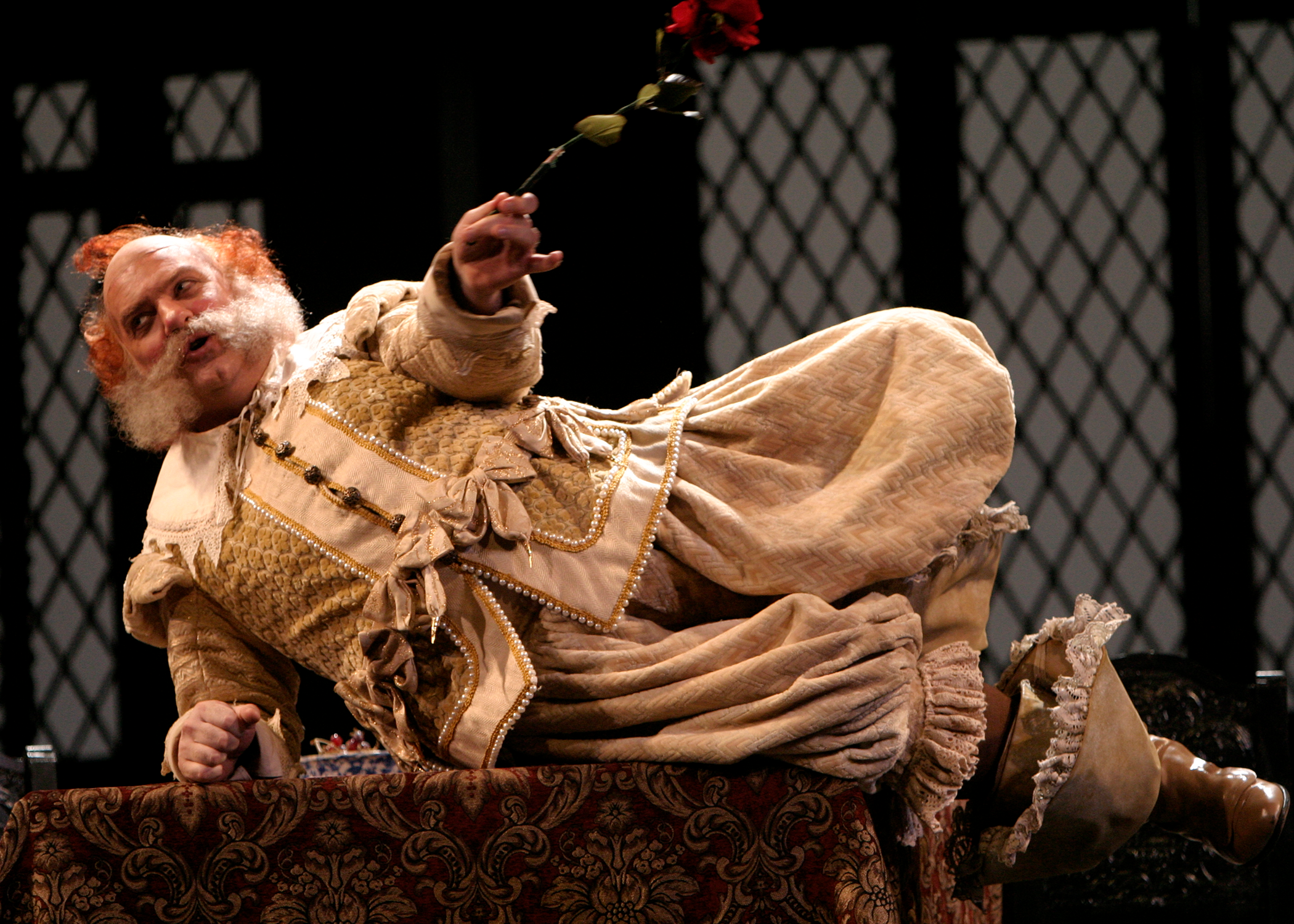
Auden further writes that “Falstaff is not the only…character whose true home is the world of music; others are Tristan, Isolde and Don Giovanni… Though they each call for a different kind of music, [they]... have certain traits in common. They do not belong to the temporal world of change. One cannot imagine any of them as babies, for a Tristan who is not in love, a Don Giovanni who has no name on his list, a Falstaff who is not old and fat, are inconceivable…Time for Tristan is a single moment stretched out tighter and tighter until it snaps… for Don Giovanni, it is an infinite arithmetic series, which has no beginning and would have no end if Heaven did not intervene and cut it short. For Falstaff, time does not exist, since he belongs to the opera buffa world of play and mock action, governed not by will or desire, but by innocent wish, a world where no one can suffer because everything he says or does is only a pretense.”
Boito’s and Verdi’s Falstaff, a perennial though loveable scoundrel, reinvents himself at every turn. After two public humiliations he has this to say: “Every sort of cheap person mocks me and glorifies himself [herself] for doing so. Yet without me, they, with all of their arrogance, wouldn’t be worth a pinch of salt. It is I who makes you astute. My cleverness creates the cleverness of the others.” No surprise, that he, in his way, attains mythological status, a hero of creativity.
Falstaff has been with me for my entire lifetime of music making. I was in my early teens when I first saw it at the old Metropolitan Opera House in the now legendary Zeffirelli/Bernstein production. Fewer than ten years later, I conducted it in my first professional engagement, literally a month after my graduation from conservatory. In the Verdian pantheon, Falstaff is to the conductor what Aida, Otello and Rigoletto are to those who sing their title roles. Falstaff’s musical structure, the demands of a perfect ensemble of singers and orchestra, is now the “protagonist,” hence fully in the domain of the musical direction. The challenge and the joy of steering this ship, while the music goes by at the speed of light, is amongst the greatest a conductor can experience.
Fifty years separate this production of Falstaff—my eighth—from my first performance of this work at age 22; approximately the same span of time separated Verdi’s first and final successes, Nabucco and Falstaff, and the failure of his first comedy Un Giorno di Regno and Falstaff’s rectification of the account.
There may be Verdi operas that I love as much, but none that I love more. He finishes his operatic life with a fugue, witty, ironic, and self-deprecating. “Tutto nel mondo e burla…” “Everything in the world is mockery.” I dedicate these performances to Giuseppe Verdi, with the gratitude that I— we all— owe him, for what he has bequeathed to all of us, and to the entire world.
James Conlon © 2013; revised May 2025