



/03-cosi/_dsc0996_pr.jpg?format=auto&fit=crop&w=345&h=200&auto=format)





Blog
September 30, 2026
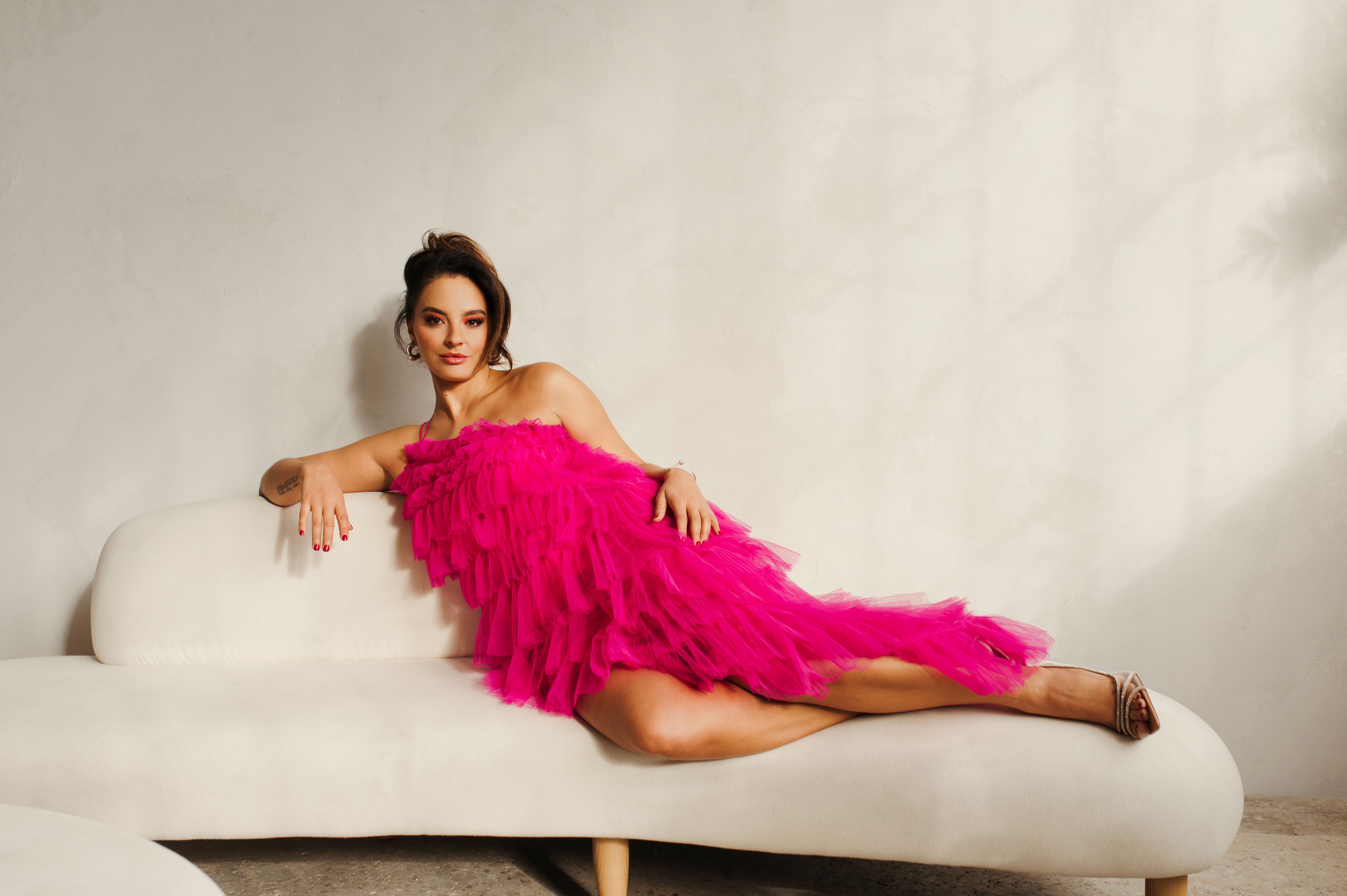
Rihab Chaieb on Carmen
Tunisian-Canadian mezzo-soprano Rihab Chaieb returns to LA Opera as Carmen, following appearances as Cherubino in The Marriage of Figaro and Dorabella in Così fan tutte. We caught up with her between rehearsals to talk freedom, flamenco, castanets—and finding her own Carmen.
What drives Carmen?
Her freedom is more important than anything else—any person, religion or society. And she says it in the opera: “Libre elle est née et libre elle mourra”: free she was born, free she will die. And she will see it through.
What does freedom mean to her?
When Carmen talks about freedom, it’s with a capital F. At the time the opera was written, a woman was as good as the man she married. Carmen makes her own decisions. She has power over her body, her sexual life, whether she works or not—everything.
So she was almost this unattainable goddess. People resented her for it. Men wanted her, but they wanted to possess and control her. Women were jealous of her but secretly wanted to be her.
It’s the freedom to be utterly and unapologetically yourself. And it’s still very relevant. Whether it’s bodily autonomy, human rights or the freedom to live in your own country, we still don’t entirely have that. This quest for freedom hasn’t really gone out of fashion in today’s world.
Does she love Don José?
I think she would use the word “love” very loosely. Don José is an exciting chapter in her life because he is the one who doesn’t initially throw himself at her, so he’s mysterious. She finds that amusing. But what starts as a playful “situationship” very quickly becomes abusive and possessive, and that’s not what she signed up for.
So I don’t think she ever loved him in the sense of imagining a long-term marriage. I think she has much more affinity with Escamillo.
How has your Carmen changed over the years?
The first few times, I was seeking a lot of external validation, especially from my audience. It’s such an iconic role that you want to please everybody. You want to make sure you’re singing it the right way—that you’re singing the “right” Carmen. There’s so much pressure to embody this woman.
But now, I make it a point to be more and more myself. And I think that’s a winning combination, because that’s what people respond to.
It’s not who I think Carmen is—it’s me as Carmen. I’m Carmen. I don’t think about portraying someone else anymore. I put myself in her situation, and what I would do is what Carmen does.
And the voice has settled a little bit, too. It’s been seven years, which isn’t a long time, but I’ve done the role enough now that it feels like it has solidified.
Was Carmen always a role you wanted to sing?
Yes—and I actually had to refuse it for a long, long time. I was so afraid of it. Like I said, it’s so iconic. There’s always, “Oh, that version is better,” or “She doesn’t sound like Teresa Berganza,” or “Agnes Baltsa was better.”
At some point, I needed to stop caring what people thought I should sound like and just sing in my own voice. Sing me.
What’s distinctive about Thaddeus Strassberger’s staging?
There’s a mysterious presence throughout the opera that Thaddeus calls the “España Oscura,” with these dark spirits of the past, present and future. It’s mystical, dangerous, almost magical. There’s more of a sense of witchcraft than in other productions I’ve done.
And the ending is unusual. It’s the first time I’ve done this particular ending, and it became very collaborative. Thaddeus gave me an idea, and I thought, “Okay, not bad—but I had something different in mind.” Then I gave him my idea, and we met right in the middle. So the ending really came from both of us. I’ve loved working with him.
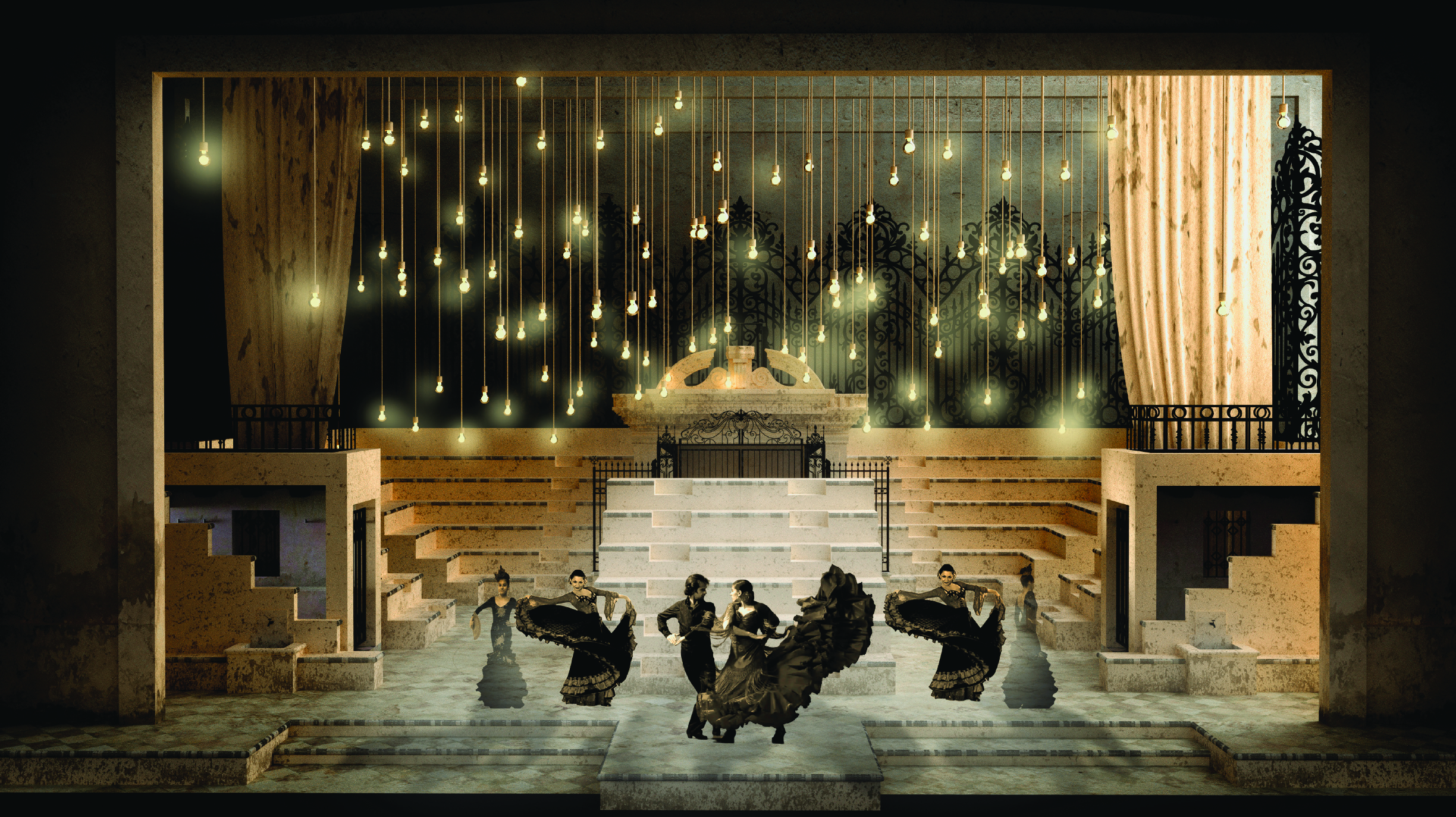
Set design by Thaddeus Strassberger for Carmen
And you’re playing castanets?
Yes! I’ve never played them before, so I’m learning. Thank God we have Antonio Najarro, our choreographer, who’s an incredible castanet player and flamenco dancer.
I did a little flamenco when I was younger, but it’s been a long time and he’s keeping me busy! I will be playing the castanets, singing and dancing. All three at the same time! It’s very hard, but I’m from North Africa, so I feel like rhythm is in our blood.
What’s it like adding so much dance and movement to the role?
For me, dance is such a free art. In daily life, I don’t care what my body looks like, but now, when I’m dancing, I really have to focus on what my body looks like and how I can sing with it. So it’s intense.
But I’m loving it. I’m loving the challenge. I’ve been in many productions of Carmen, but none as physical and active as this one. Expect a lot of action, thanks to our wonderful fight director Ran Arthur Braun.
Which is more fun to sing: the Habanera or the Seguidilla?
The Habanera. It’s iconic, and you immediately have everyone’s attention—onstage and in the audience. It’s the first thing you sing, and it’s where you establish who Carmen is.
She’s flirty, she doesn’t care what people think of her, she’s powerful, she’s sweet—but don’t cross her. You get all of that in one aria.
Does being a native French speaker help?
Absolutely. I feel bad sometimes because I see how hard French is when I sing Carmen with people who aren’t native speakers. Everybody has great French, but you see how difficult it is.
I’m very grateful French is one of my first two languages, along with Arabic, because French is a b*tch.
Your previous LA Opera roles were Cherubino and Dorabella. Going from Mozart to Carmen seems like quite a change.
Actually, they’re all driven by sex, I think! Cherubino literally just wants to […] everything that moves. Dorabella is having her coming-of-age, first-libido moment. And Carmen is like if Cherubino and Dorabella matured together and had a child—it would be Carmen.
I love comedy. I actually think comedy is harder than drama. Drama kind of drives itself, but with comedy, you really need the timing.
After spending so much time in Carmen’s head, what advice would you give Don José?
One: Run away—for everyone’s sake!
You know what’s interesting? In opera or in life, it’s often the people we least expect who change the course of our lives. It isn’t necessarily the person you thought it would be—your soulmate or your high school sweetheart. Sometimes somebody comes into your life for a split second and causes so much destruction.
Carmen and José are just a dangerous concoction of oil and fire. They’re probably good people in their own lives, but together it’s lethal. And sadly, there’s a lot of that in real life.
Two: Go back to Micaëla. He has mother issues and she is better suited to his personality. It’s in his best interest.
And how does it feel to be back in Los Angeles?
I love it. I want to come here every year. It’s a city and company I love, I have many friends here, and the audience is simply so welcoming. I had a conversation with a friend recently, and I told him that if I had to choose between New York and Los Angeles, LA would win hands down.
To see Carmen on our stage, click here to get tickets.