








Blog
November 11, 2026
Is It Opera? Is It Operatic? It's Candide!
An outrageous adventure, a spectacular score, and a question that refuses to have just one answer.
What makes something an opera? Is it the singing, the orchestra, the storytelling, or perhaps the sheer scale of the drama? And what happens when a work refuses to fit neatly into just one category?
Enter Leonard Bernstein's Candide

If ever there were a work that refused to be put in a box, it's Bernstein's Candide.
Inspired by Voltaire's 18th-century satire, Bernstein created a musical world that moves effortlessly between operatic vocal fireworks, operetta's charm, Broadway's theatrical energy, and biting social satire.
In other words, it's not quite one thing or another. And that's precisely what makes it so much fun.
So, what exactly is Candide?
Is it opera? Is it operetta? Is it musical theatre? Is it a comic adventure, a philosophical satire, or an excuse for some of the most dazzling vocal fireworks ever written for the stage?
The answer, of course, is yes.
Leonard Bernstein's Candide is one of those wonderfully difficult-to-classify works that seems perfectly happy to ignore the rules. It has the musical sophistication of opera, the sparkle of operetta, the wit of Broadway, and the theatrical imagination of a spectacular adventure.
And that's part of its magic.
A little optimism goes a long way. Or does it?
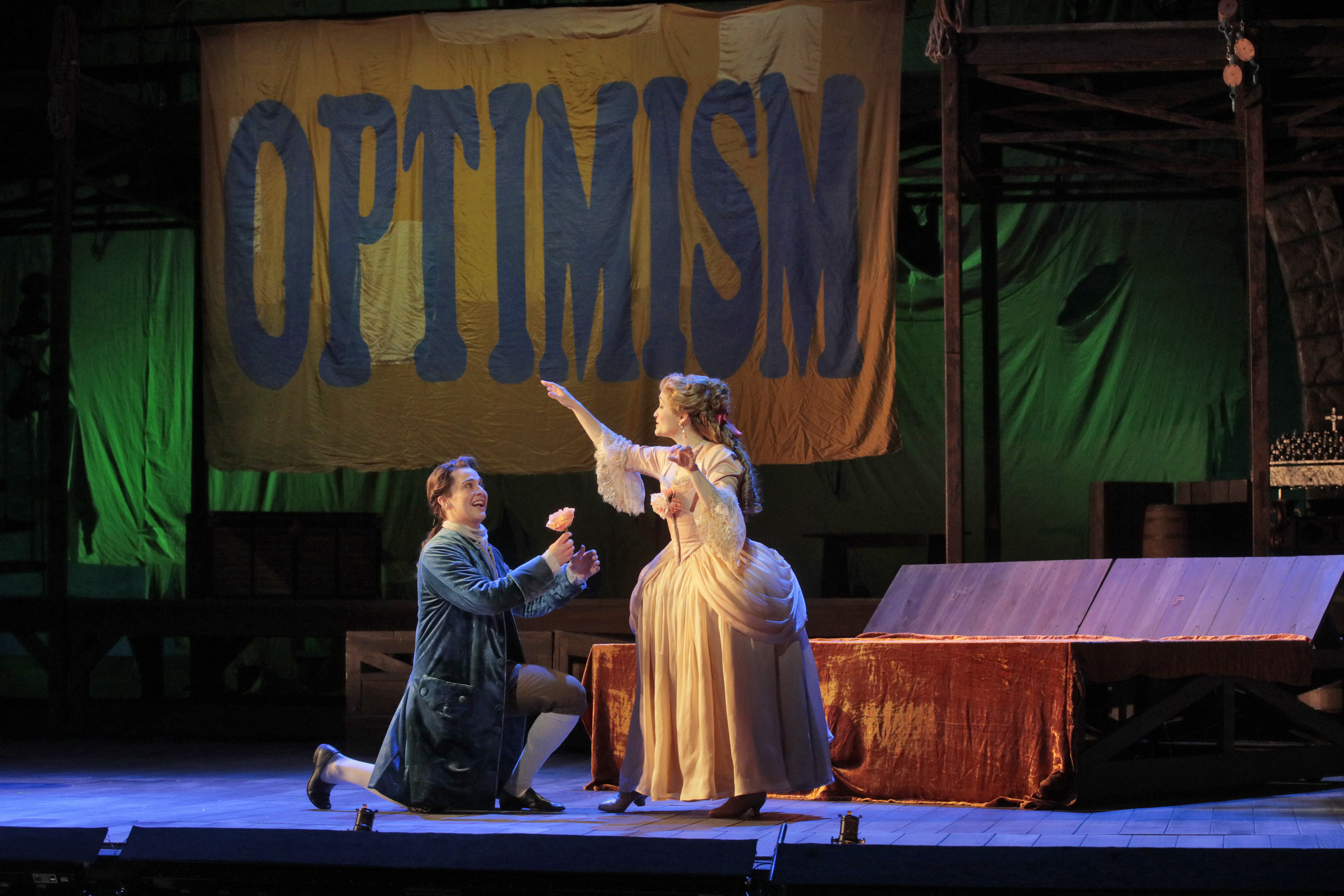
Based on Voltaire's famously irreverent 1759 novella, Candide follows a young man whose worldview is built around one rather optimistic proposition: everything happens for the best in the best of all possible worlds.
His tutor, Dr. Pangloss, has taught him to believe it. His beloved Cunegonde gives him something to dream about. And the world? Well, the world seems determined to prove them both wrong.
What follows is a whirlwind of romance, betrayal, war, earthquakes, shipwrecks, the Inquisition, unexpected reunions, and enough misfortune to make even the most enthusiastic optimist reconsider his philosophy.
Yet through it all, Candide keeps going.
Voltaire's satire takes aim at blind optimism and the comfortable assumption that everything in life happens for a good reason. Bernstein takes that wonderfully provocative idea and turns it into a theatrical playground.
And what a playground it is!
Bernstein: A composer who refused to stay in one musical world
Leonard Bernstein was equally at home in the concert hall, the opera house, and on Broadway. His musical imagination seemed to know no boundaries, and Candide is a wonderful example of what happens when those worlds meet.
The score moves effortlessly between grand operatic gestures, sparkling comedy, lyrical romanticism, and infectious theatrical energy.
One moment we're swept away by a beautiful ensemble; the next, we're laughing at a character's outrageous predicament. There are soaring melodies, intricate vocal writing, unexpected musical turns, and an orchestral imagination that keeps the whole adventure alive.
And then there's "Glitter and Be Gay."
Oh, Cunegonde!
If ever there were a musical showpiece that could settle the question of whether Candide is operatic, this might be it.
Cunegonde's spectacular aria is a coloratura soprano's dream—and perhaps her ultimate test. With its astonishing vocal acrobatics, sparkling high notes, and delicious theatrical irony, it is simultaneously a dazzling display of vocal technique and a wonderfully funny piece of storytelling.
It's a moment that reminds us that Bernstein understood the operatic voice just as surely as he understood the Broadway stage.
And there's plenty more to enjoy, including the irresistible optimism of "The Best of All Possible Worlds" and the moving finale, "Make Our Garden Grow."
So, is it opera?
Let's consider the evidence.
It has an orchestra, demanding vocal roles, elaborate ensembles, and music that can challenge even the most accomplished singers.
That's pretty operatic.
But it also has comedy, slapstick, rapid-fire storytelling, theatrical spectacle, and something else that makes it wonderfully accessible: spoken dialogue. Unlike a traditional opera in which the story unfolds almost entirely through music, Candide mixes spoken scenes with its extraordinary musical numbers, giving the characters room for witty exchanges, comic timing, and plenty of theatrical mischief.
That's pretty Broadway.
Perhaps the real question is why we feel the need to choose.
Candide reminds us that great musical theatre doesn't always fit neatly into a category. Sometimes the most exciting experiences happen when artistic boundaries disappear.
An adventure for the best of all possible audiences
You don't need to know Voltaire to enjoy Candide. You don't need to be an opera aficionado to appreciate Bernstein. And you certainly don't need to understand every philosophical argument to appreciate the extraordinary entertainment unfolding onstage.
If you love opera, you'll find musical riches to savor.
If you love Broadway, you'll recognize the theatrical sparkle and storytelling.
And if you're simply looking for a wonderfully entertaining night at the theatre, you're in for a treat.
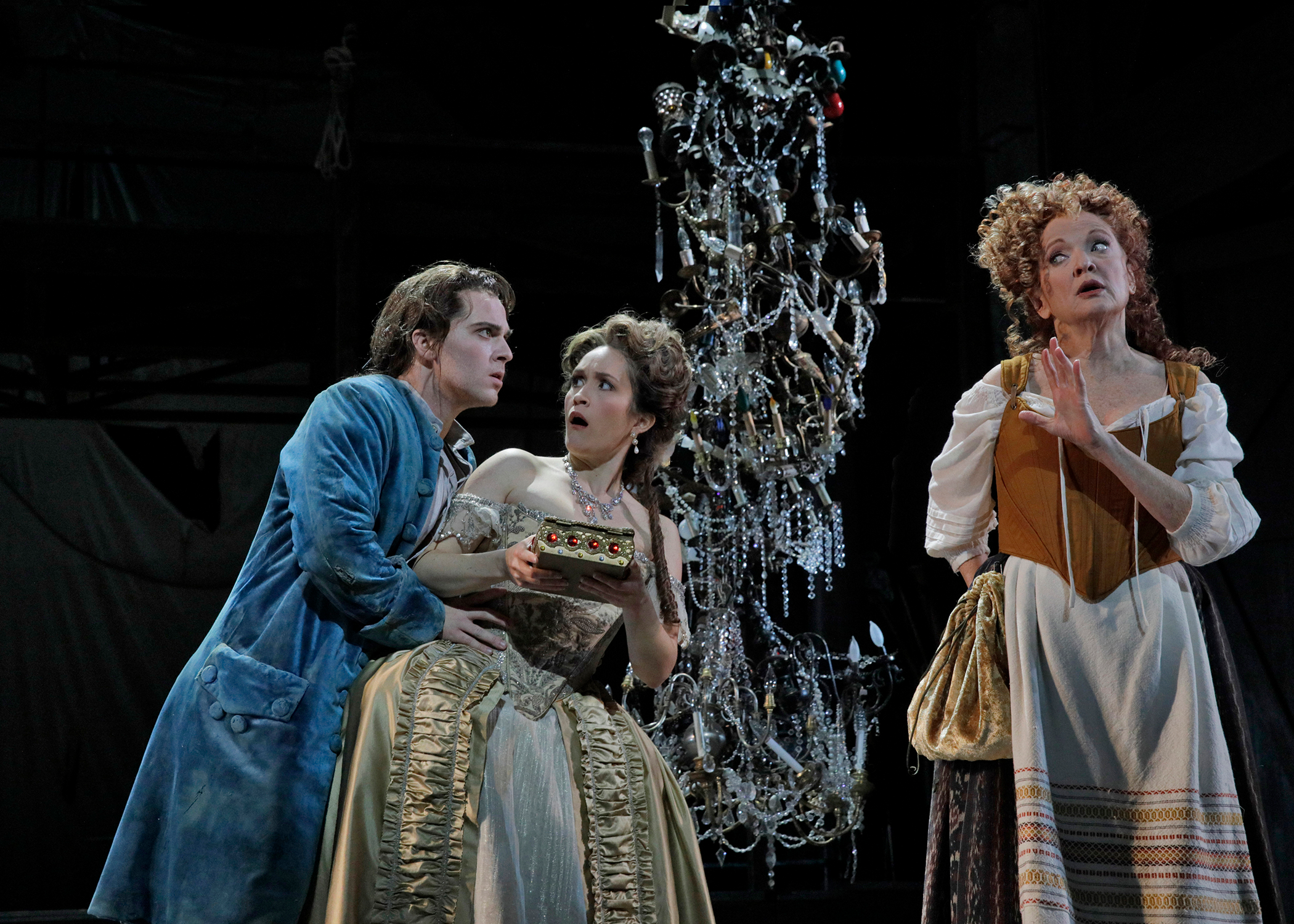
LA Opera brings this exuberant adventure to the Dorothy Chandler Pavilion in a production filled with lavish costumes, colorful sets, and the whirlwind theatrical energy this work demands.
So, is it opera? Is it operatic?
It's Bernstein. It's Voltaire. It's comedy, satire, romance, vocal fireworks, and a whole lot of theatrical mischief.
It's Candide.
And perhaps, after all, this really is the best of all possible worlds.
Join LA Opera for Candide, November 21–December 13, 2026, at the Dorothy Chandler Pavilion.
