








Blog
November 17, 2026
At the Opera Table: Five Unforgettable Food and Drink Moments
Food and drink have a funny way of bringing people together. Whether it's a celebratory feast, a late-night indulgence, or simply a glass of something refreshing, a good meal can make any occasion more memorable. But in opera, food isn't always about enjoying a delicious dinner with friends and family. Sometimes it leads to mischief, sometimes to misfortune, and occasionally, it can be downright deadly.
From a village celebration that takes an unexpected turn to a dinner served alongside a particularly sinister interrogation, opera has no shortage of memorable moments involving food and drink. Here are five that prove a meal can be just as dramatic as the music itself.
Albert Herring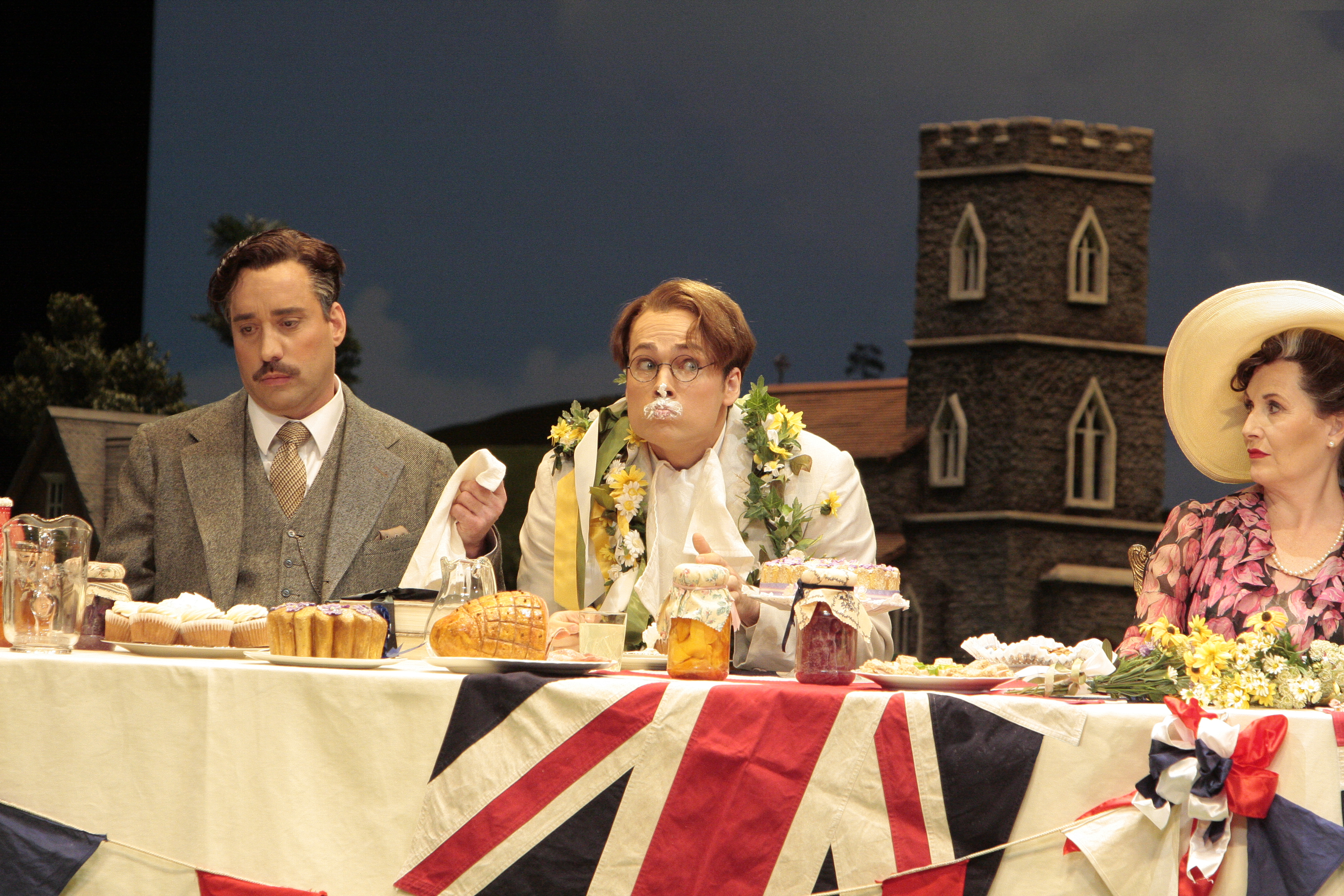
Alek Shrader (center) as Albert in LA Opera's 2012 production of Albert Herring, with Richard Bernstein as Police Superintendent Budd and Janis Kelly as Lady Billows. (Photo: Robert Millard)
What's a village celebration without a little something to drink? In Benjamin Britten's Albert Herring, the small English town of Loxford is preparing for its annual May Day festivities. When the town's most virtuous young women are deemed unsuitable for the honor of May Queen, the villagers decide to crown a May King instead. Their choice? The painfully innocent Albert Herring.
The festivities include a grand banquet in Albert's honor, complete with speeches, a feast, and plenty of lemonade. There's just one small problem: butcher's assistant Sid has secretly added a generous helping of rum to Albert's glass.
After unknowingly drinking the spiked lemonade, Albert finds himself quite a bit more high-spirited than usual. And once the celebrations are over, that newfound confidence sends him off on an adventure of his own. The next morning, the villagers fear the worst when Albert goes missing, only to discover that their supposedly virtuous May King has enjoyed a rather eventful night out.
It turns out that sometimes all it takes is a little rum to change someone's perspective on life!
Falstaff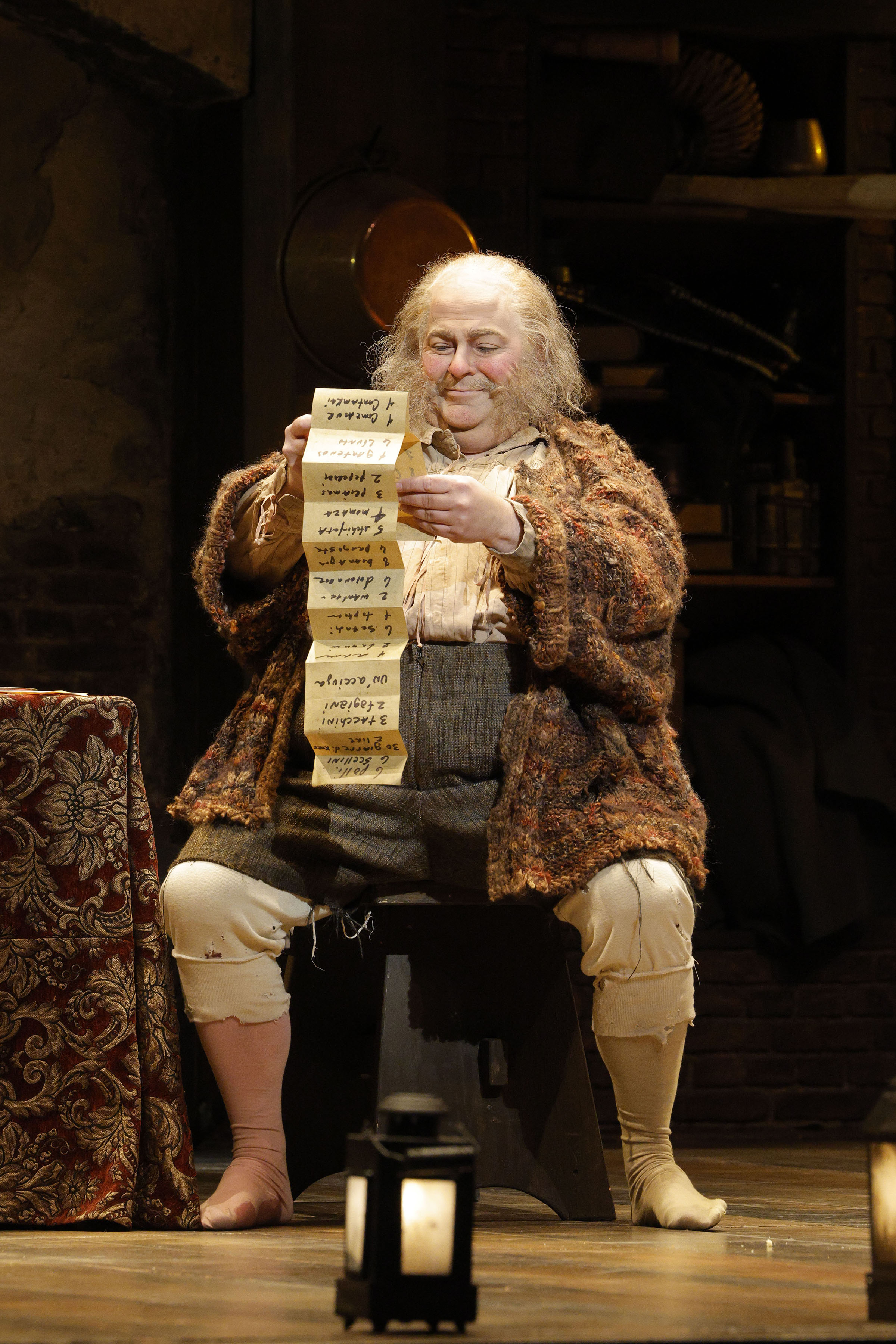
Craig Colcough as Sir John Falstaff in LA Opera's 2026 production of Falstaff. (Photo: Cory Weaver)
If there's one operatic character who knows how to appreciate the finer things in life, it's Sir John Falstaff. In Giuseppe Verdi's final opera, the larger-than-life knight has an appetite for food, drink, and just about every other pleasure life has to offer.
Just how extravagant are Falstaff's appetites? Consider the rather impressive bill he runs up at his favorite tavern. The list includes six chickens, three turkeys, two pheasants, an anchovy, and plenty of drink: 30 flagons of sherry. It's quite the order, even by generous dinner party standards!
Unfortunately, Falstaff's appetite is considerably larger than his wallet. Faced with the bill, he decides that the best way to solve his financial troubles is to pursue two wealthy married women, hoping to improve his fortunes through romance. Naturally, his plans don't go quite as expected.
For Falstaff, a good meal is never just a meal. It's a way of life—and apparently, a rather expensive one.
Tosca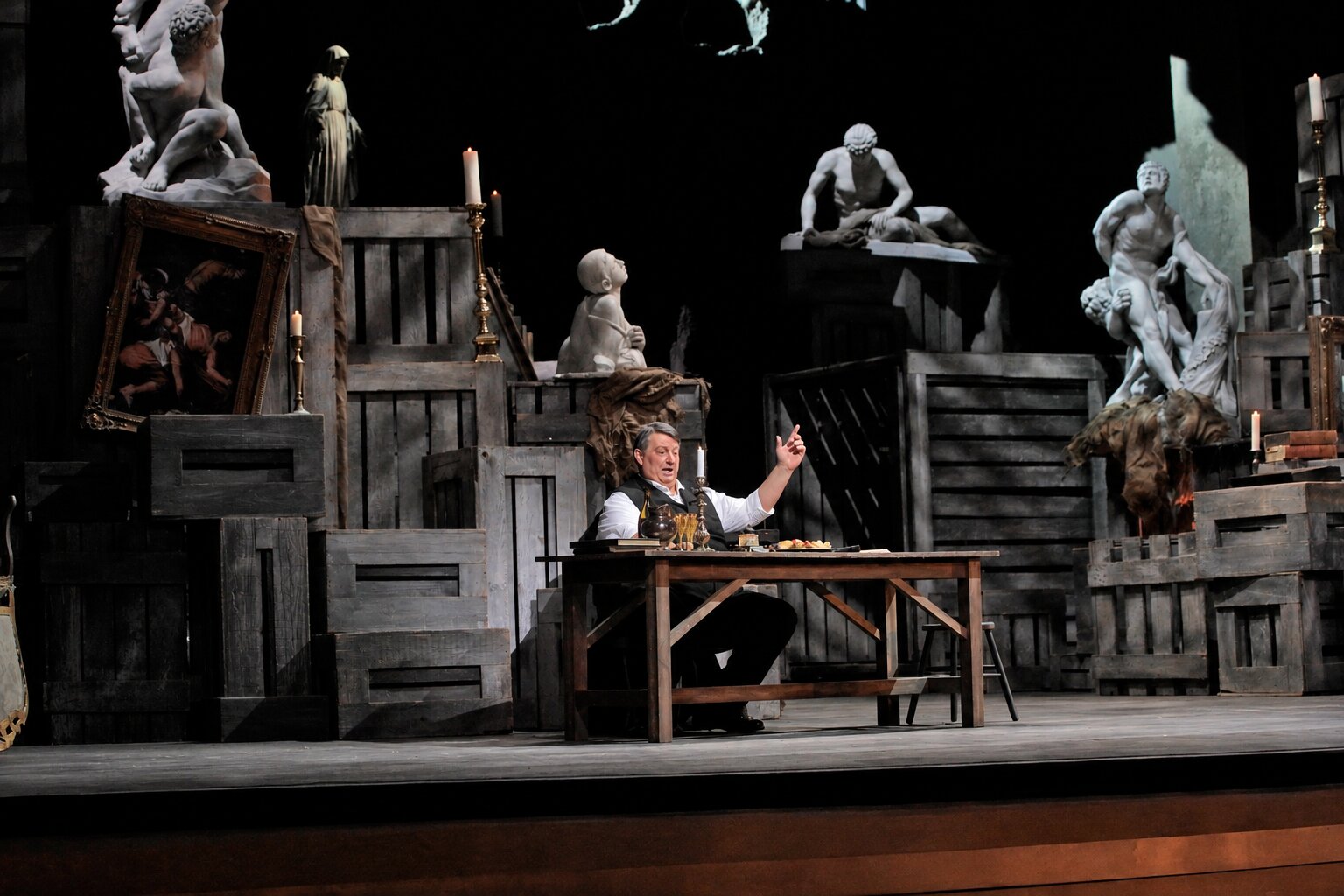
Ambrogio Maestri as Scarpia in LA Opera's 2017 production of Tosca. (Photo: Ken Howard)
Dinner and a little light conversation might sound like a pleasant way to spend an evening, but in Giacomo Puccini's Tosca, the dinner table becomes the setting for one of opera's most chilling encounters.
In Act II, the villainous Baron Scarpia is enjoying his dinner while plotting the fate of the people around him. His prisoner, the painter Mario Cavaradossi, is being tortured in an adjoining room, while prima donna Floria Tosca is forced to listen to her beloved's cries.
Scarpia's calm enjoyment of his meal stands in stark contrast to the suffering unfolding just beyond the door. He uses Cavaradossi's predicament to pressure Tosca into surrendering herself to him in exchange for her lover's freedom. But when Scarpia moves to claim his prize, Tosca grabs a knife from the dinner table and stabs him to death.
It's hardly the sort of dinner conversation anyone would want to experience. And as Scarpia discovers, sometimes the most dangerous thing at the table isn't what's on the menu.
Rise and Fall of the City of Mahagonny
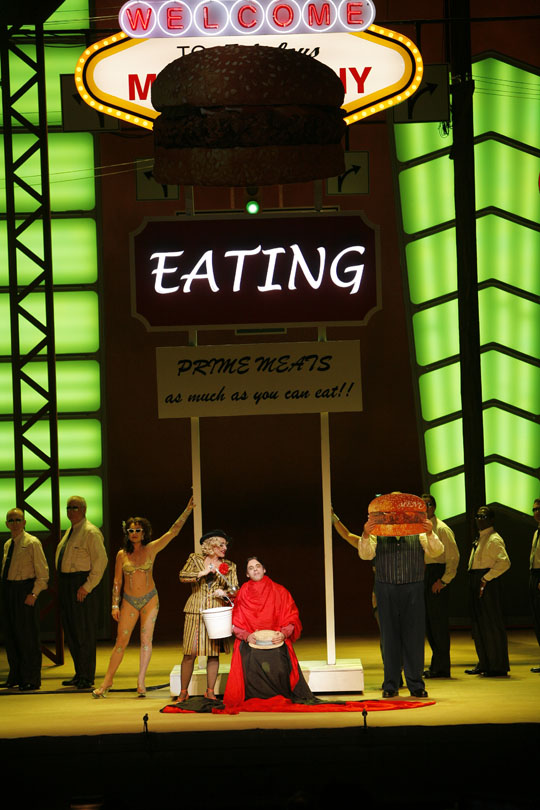
Patti LuPone as Leocadia Begbick and John Easterlin as Jack in LA Opera's 2017 production of Rise and Fall of the City of Mahagonny. (Photo: Robert Millard)
In Kurt Weill and Bertolt Brecht's Rise and Fall of the City of Mahagonny, the motto seems to be simple: eat, drink, and enjoy yourself while you can. The fictional city of Mahagonny is founded as a place where pleasure comes first and practically anything goes.
After a hurricane threatens the city but ultimately passes it by, its residents take the opportunity to embrace their indulgent lifestyle even more enthusiastically. A series of scenes celebrates the city's favorite pastimes: eating, drinking, boxing, and other forms of excess.
But one resident takes the philosophy a little too far. Jack, determined to enjoy himself to the fullest, consumes an enormous amount of food—so much that he literally eats himself to death.
It's a darkly comic reminder that even in a city where almost anything is permitted, there can still be consequences for overindulgence. Perhaps it's worth remembering that moderation has its place, even at the most extravagant of feasts!
The Magic Flute
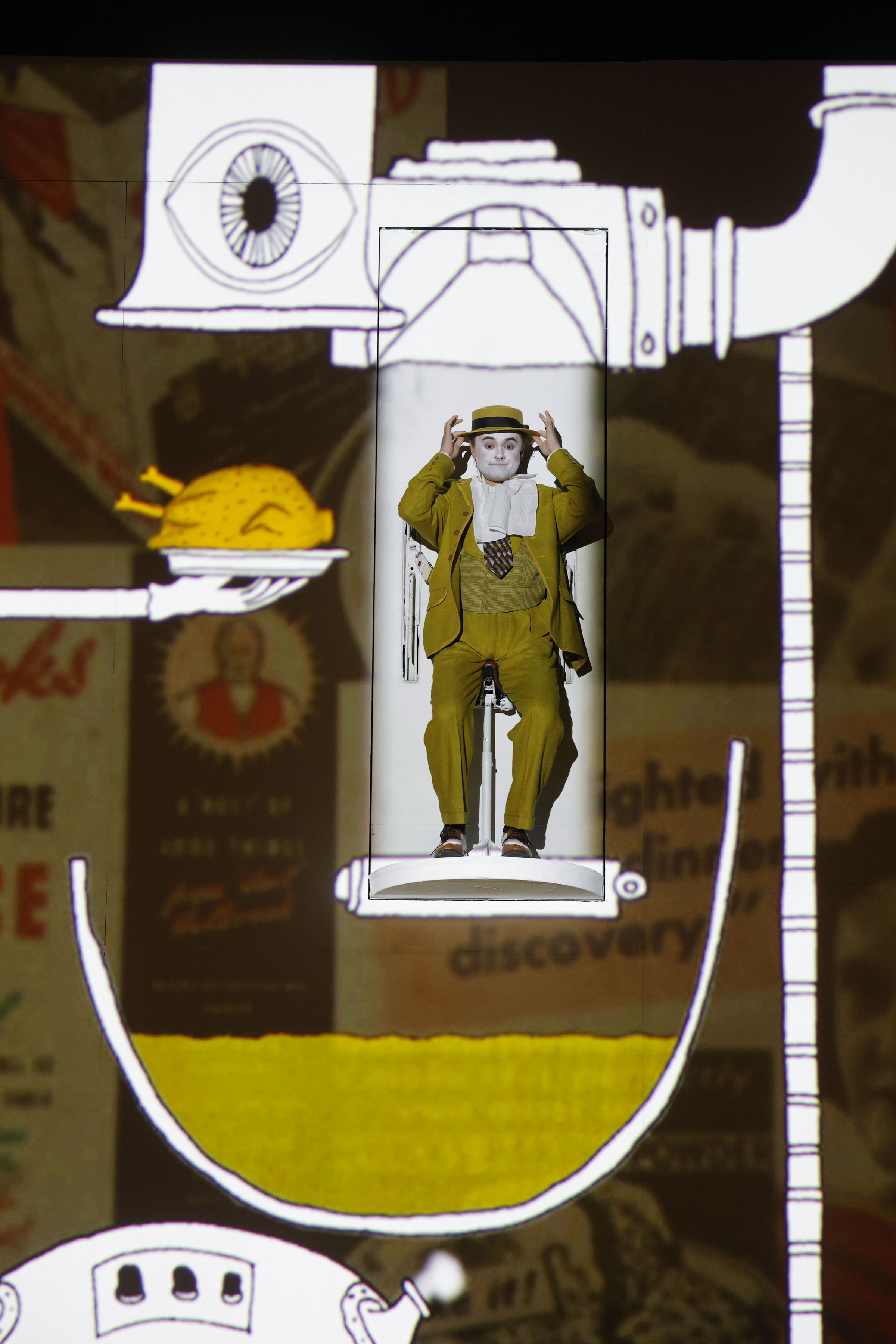
Kyle Miller as Papageno in LA Opera's 2026 production of The Magic Flute. (Photo: Cory Weaver)
Finally, we turn to Wolfgang Amadeus Mozart's The Magic Flute, where a little self-control is apparently harder to come by than one might expect.
As part of their journey, Tamino and Papageno must undergo a series of trials, including a trial of silence. While Tamino takes his responsibilities seriously, Papageno is considerably less committed to the process.
When food and drink enter the picture, Papageno's priorities become clear. The birdcatcher is far more interested in satisfying his appetite than observing the solemn silence expected of him. It's a wonderfully funny contrast between the two characters: one determined to prove his discipline, the other much more interested in life's simpler pleasures.
After all, what's the point of a grand adventure if you can't enjoy a snack along the way?
A Feast of Drama
From Albert Herring's unexpected night out to Falstaff's extravagant appetite, Scarpia's sinister dinner, Jack's fatal overindulgence, and Papageno's struggle to resist temptation, these operas show that food and drink can play all sorts of roles onstage.
They can bring people together, reveal a character's true nature, or set the stage for an unforgettable moment of comedy or tragedy.
One thing is certain: in opera, there's always room for a little drama at the dinner table.
